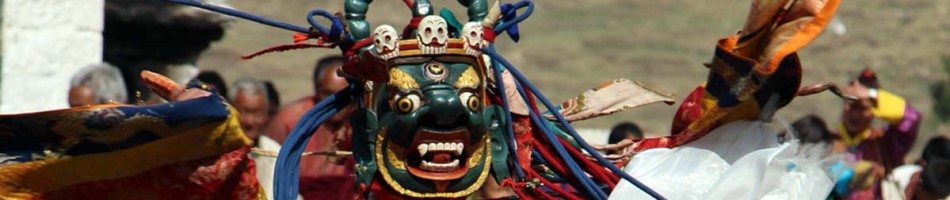
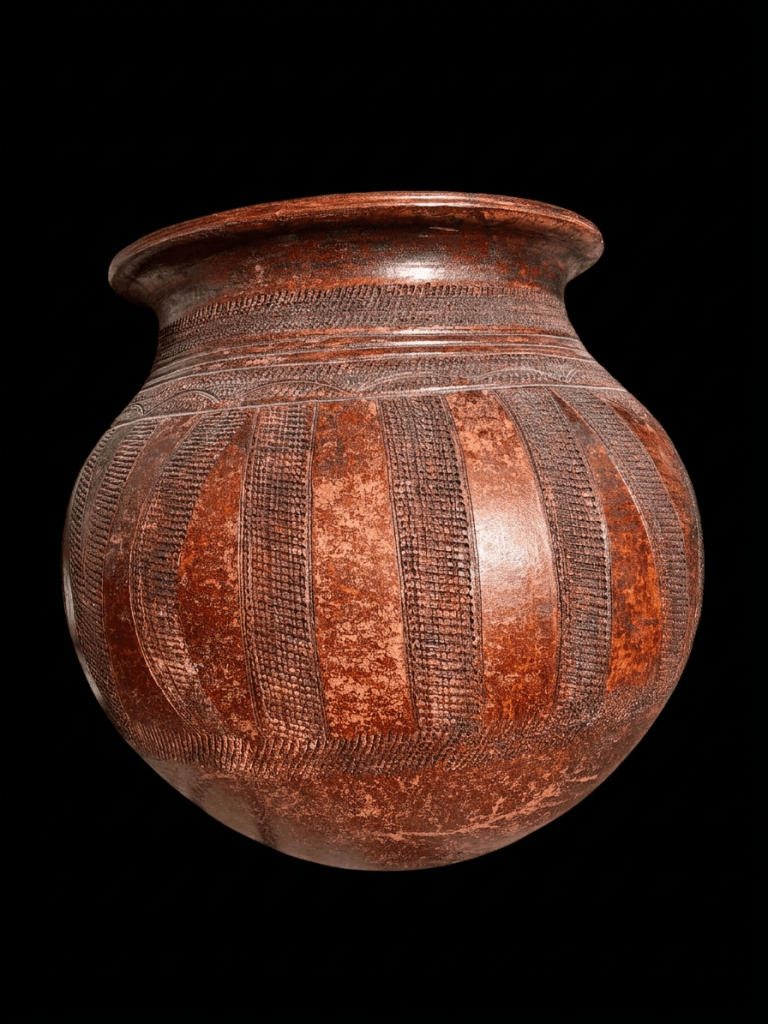
Water storage pot earthenware with incised and rouletted decoration and locust bean ‘varnish’, Gwari people, Iddo village, Nigeria
Gwari women make pottery in family groups, with daughters learning from their mothers and continuing their craft when they move to their husbands’ compounds. In form and technique Gwari ceramics are related to those of their eastern Nupe neighbors. Potters use the direct pull method, punching down into a lump of clay and then pulling up diagonally with their fingers to form the vessel’s sides, adding coils if a larger size is desired.
Water containers are decorated with incising and roulette patterns that showcase the sure-handed drawing skills of the maker. Gwari potters incise their wares with a blade that cuts neatly through the coarse clay, producing straight or slightly curved lines that contrast with the roundness of the pot. Here a series of horizontal lines encircles the vessel’s neck in regular intervals, while vertical bands–alternating between straight and elliptical in shape and between smoothly burnished and rough in texture–embellish its body. This container’s dark color results form a solution of locust tree pods that was applied to the red-hot vessel immediately upon its removal from the fire. The coating also helps make the pot watertight.
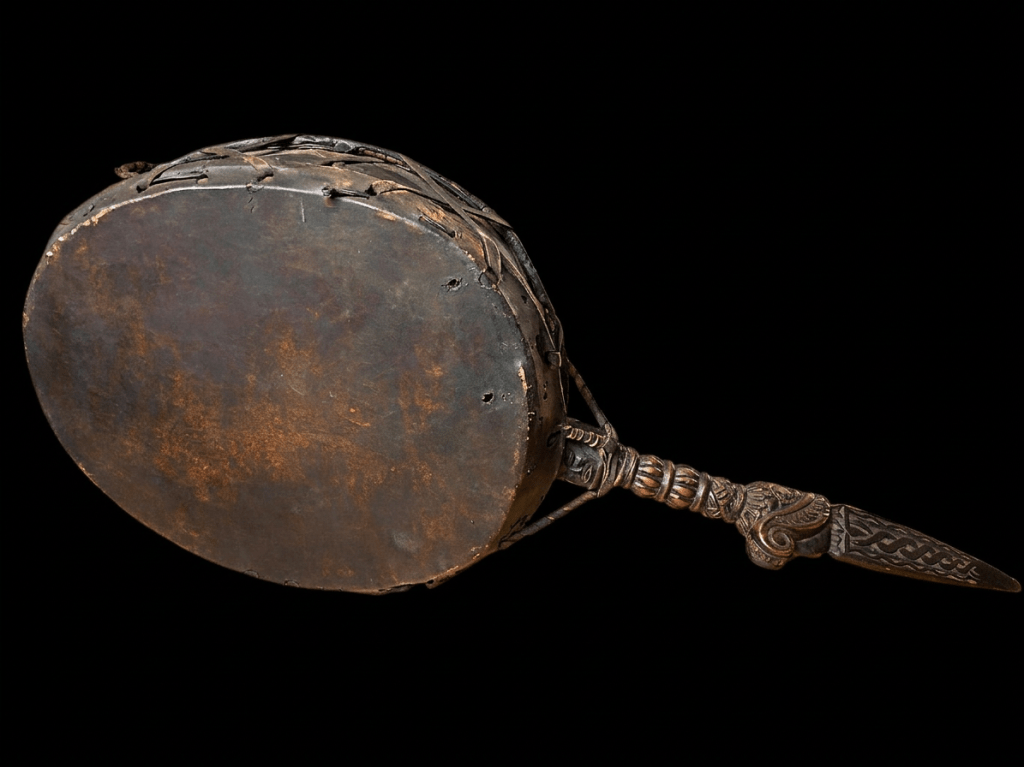
The Dhyāngro, an antique ritual shaman drum, featuring a leather drumhead and a hand-carved wooden handle in a dagger style. Traditionally used by Jhakri (shamans) for rituals to induce trances. The drum is double-headed with a seed rattle inside and dates back to the early 20th century, Nepal
The dhyangro is a frame drum used by jhakri shamans across Nepal, India, and Tibet, particularly among ethnic groups including the Magars, Kirati, Tamang, Gurungs, and Sherpas. This instrument represents one of the oldest shamanic traditions in the Himalayan region, serving as an essential tool for spiritual practitioners who act as intermediaries between the human and spirit worlds.
The drum itself has a distinctive construction. It can be either single or double headed, with the double headed versions said to have male and female sides. The frame is made of wood with animal skin stretched over it, and the drum is equipped with jingles and played with a curved cane. Unlike most frame drums, the dhyāngro includes a handle, which is often elaborately carved with symbolic imagery representing spiritual concepts central to Himalayan belief systems.
The shamans who use these drums, known as jhakri or dhami in various Himalayan regions, represent one of the world’s oldest continuous spiritual traditions. Shamanism in Nepal is deeply tied to animism, the belief that natural elements such as rivers, mountains, trees, and animals possess spirits. These practitioners serve multiple roles within their communities, functioning as healers, spiritual guides, and ritual specialists who maintain balance between humans and the natural world.
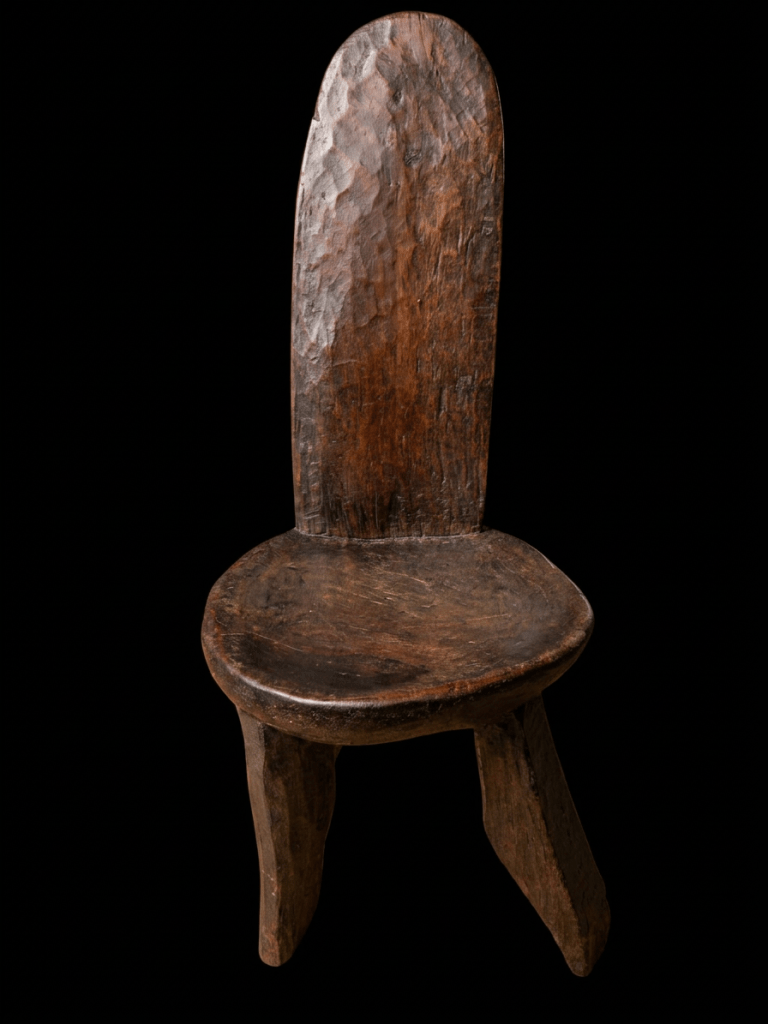
An antique high-backed, four-legged ceremonial chair originating from the Wolayita or Oromo culture, Ethiopia
Hand-carved from a single solid piece of dense hardwood, often from the Wanza tree. Traditionally used as a prestige object by chiefs or elders, serving as a symbol of rank and status within the community. Features a distinctive tall, gracefully curved backrest that transitions into a concave seat, supported by four angled legs. The wood exhibits a dark, glossy patina developed over time, along with visible carving marks and imperfections consistent with age and use.
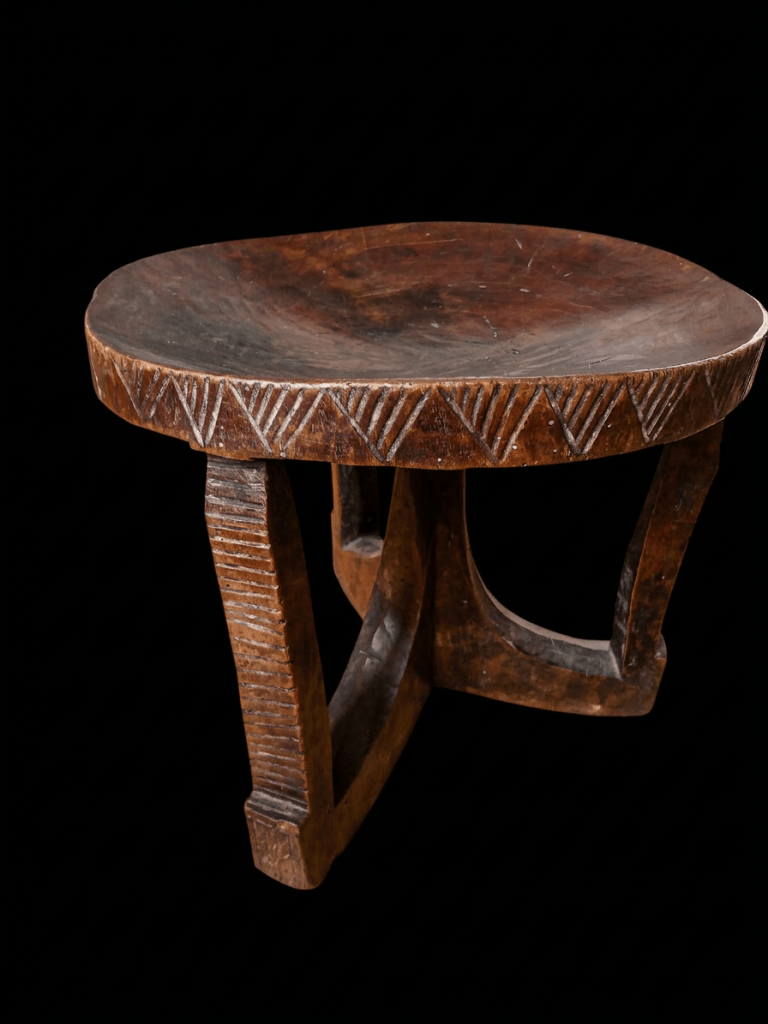
Antique stool, hand-carved from a single piece of wood, featuring a gently curved seat, geometric carvings, and a three-legged base, Ethiopia
Traditionally crafted by artisans in Ethiopia, such as the Oromo people, dating to the early 20th century. Features a concave, hand-carved seat and a geometric base, reflecting traditional craftsmanship.
Historically served as functional furniture and symbols of status, age, and wisdom. Typically constructed from indigenous hardwoods with a hand-carved patina.
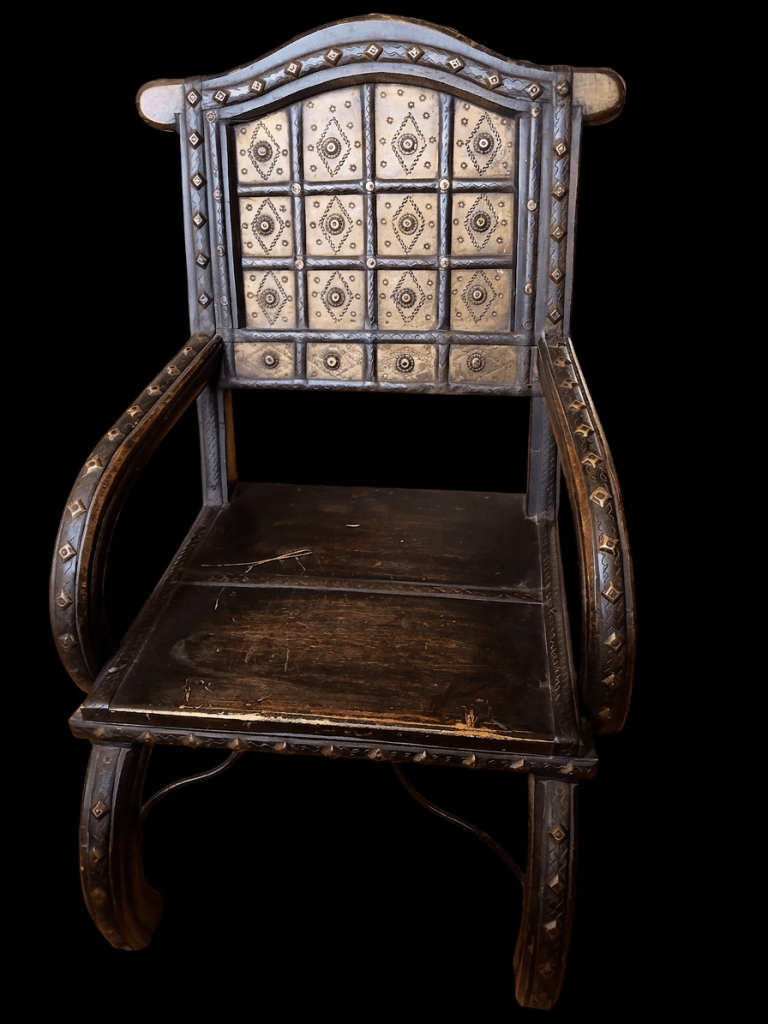
Indian Maharaja style throne chair, decorated with brass panels and studs, Kashmir
Traditional Indian Maharaja style, often featuring dark hardwood and ornate metalwork. Constructed with wood and decorated with brass panels, studs, and sometimes iron strapping. Heavily decorated, decorative back and arms, with a sturdy construction.
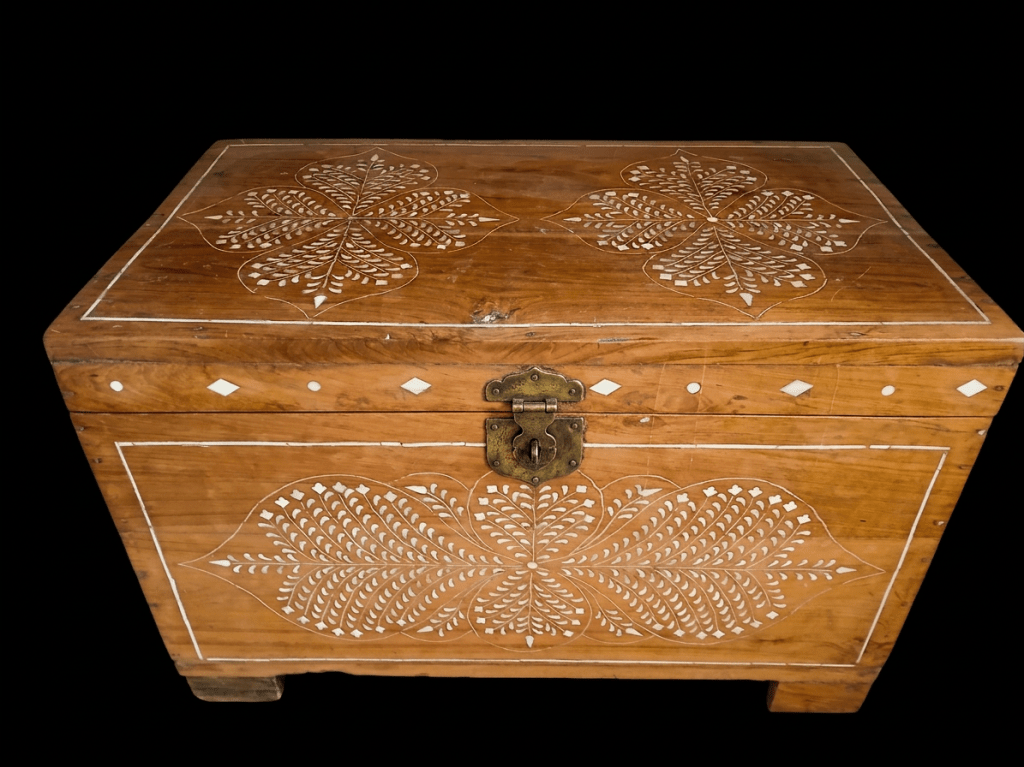
Antique Teak wood storage chest, featuring intricate mother-of-pearl or bone inlay work in a floral and geometric pattern, Syria
Typically constructed from high-quality woods such as teak and decorated with hand-carved inlay pieces of bone or mother-of-pearl. Features decorative inlaid patterns and sometimes includes brass fittings for added ornamentation. Primarily used as a decorative storage box or blanket chest.
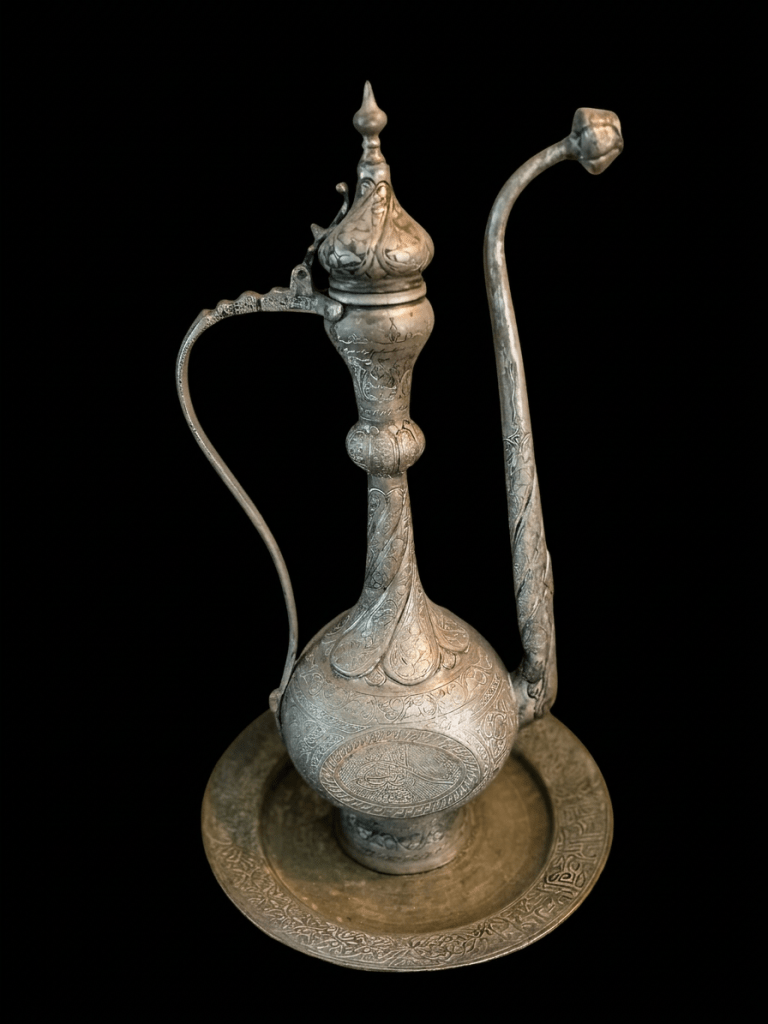
A traditional Turkish ewer (ibrik), crafted from copper with a tin-plated finish and intricate, hand-engraved motifs including Islamic caligraphy and geometric patterns, Turkey
Copper with tin plating (tombak or similar antique finish). Features a slender neck, decorative handle, long spout, and a detailed lid. Beautifully Islamic caligraphy and geometric pattern. Traditionally used for washing hands before meals. Often categorized as authentic Turkish folk art or decorative metalwork
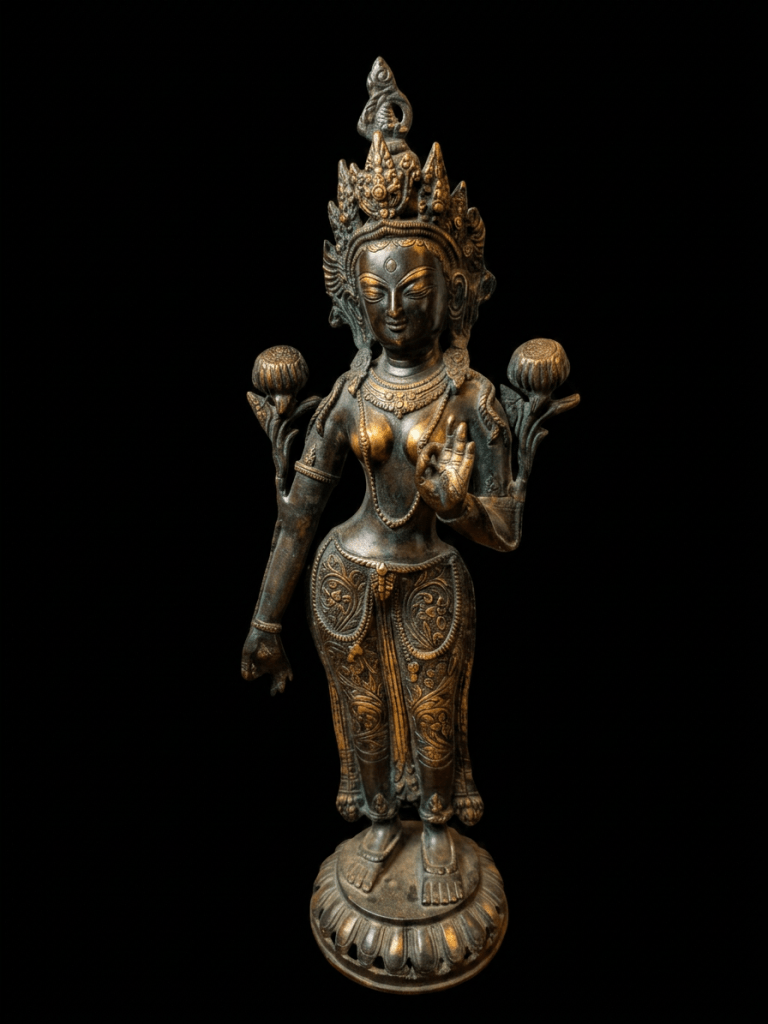
Bronze statue of the Buddhist goddess Tara, typically originating from Nepal
Representing Tara, the female bodhisattva of compassion in Mahayana Buddhism. Traditionally cast in bronze or copper using the lost-wax method, often featuring intricate carvings. She is frequently depicted wearing a crown and jewelry, standing in a tribhanga pose (triple-bent posture), and holding lotus blossoms. These statues are commonly used for meditation, altars, or as decorative collectible art.
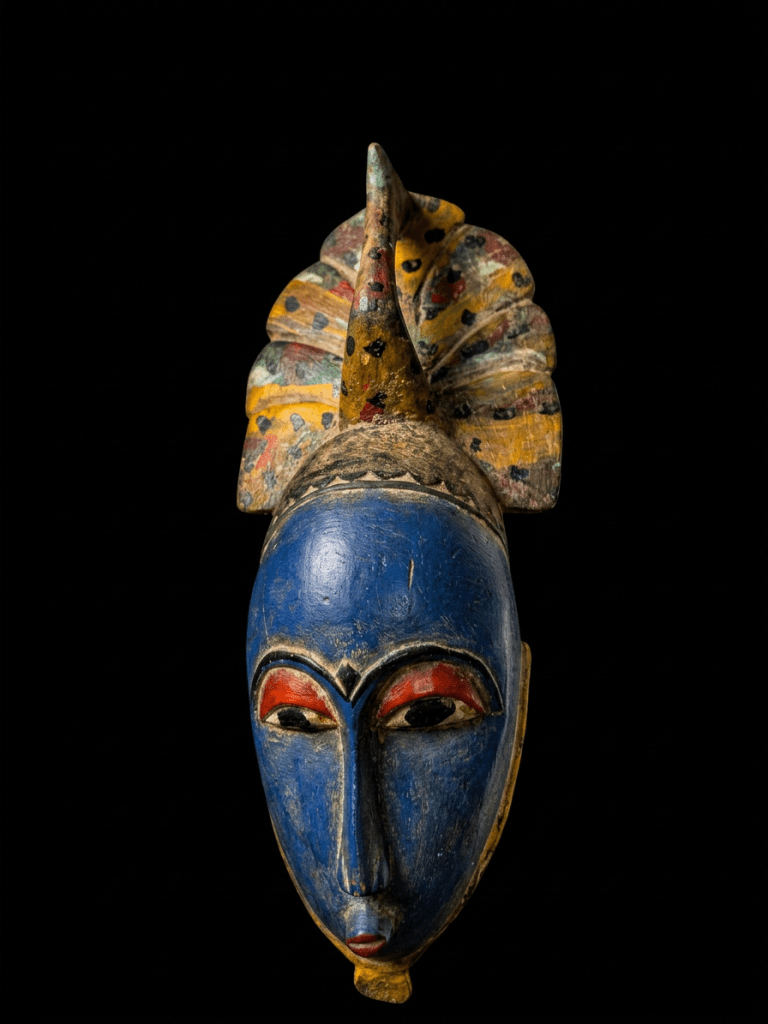
Decorative painted mask made by the Baule tribe. It is crafted from carved, painted wood and features a distinctive blue face with red and black accents, topped with a bird, Ivory Coast
Highly revered hardwood carvings used in traditional ceremonies such as the Goli dance, Mblo performances, and Gba Gba rituals. These masks often feature idealized human portraits with intricate scarifications, serene expressions, and animal attributes. They serve as conduits to the divine, intended to appease spirits, honor elders, and connect the wearer with ancestors
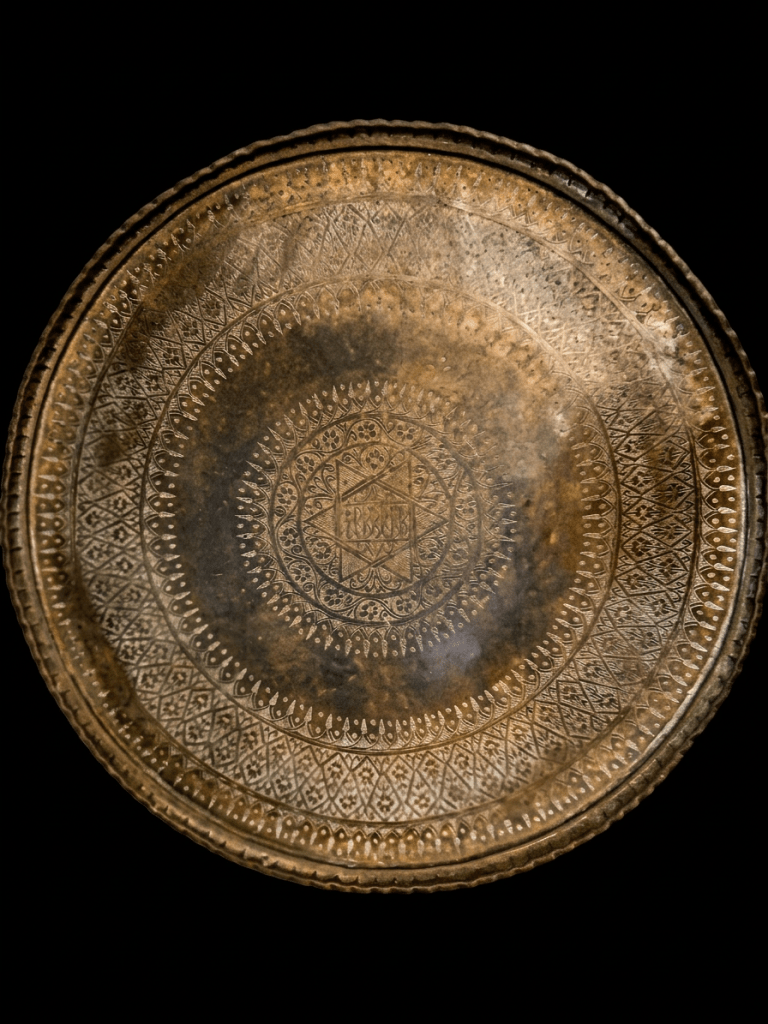
Antique Middle Eastern brass serving tray, likely dating from the late 19th to early 20th century, Syria
It is made of solid brass, featuring intricate hand-hammered, etched, or engraved geometric and floral patterns. The design includes a central medallion and concentric circles of detailed calligraphy or arabesque motifs. The star of David confirms the Jewish metal workers in Syria, particularly in Damascus, who were renowned for their centuries-old tradition of crafting exquisite metalwork, specifically in brass, copper, gold, and silver. Operating mainly within the Jewish Quarter of the Old City (Omawayad Bazaar), these artisans were masters of inlaying metals—a technique known as damascening.
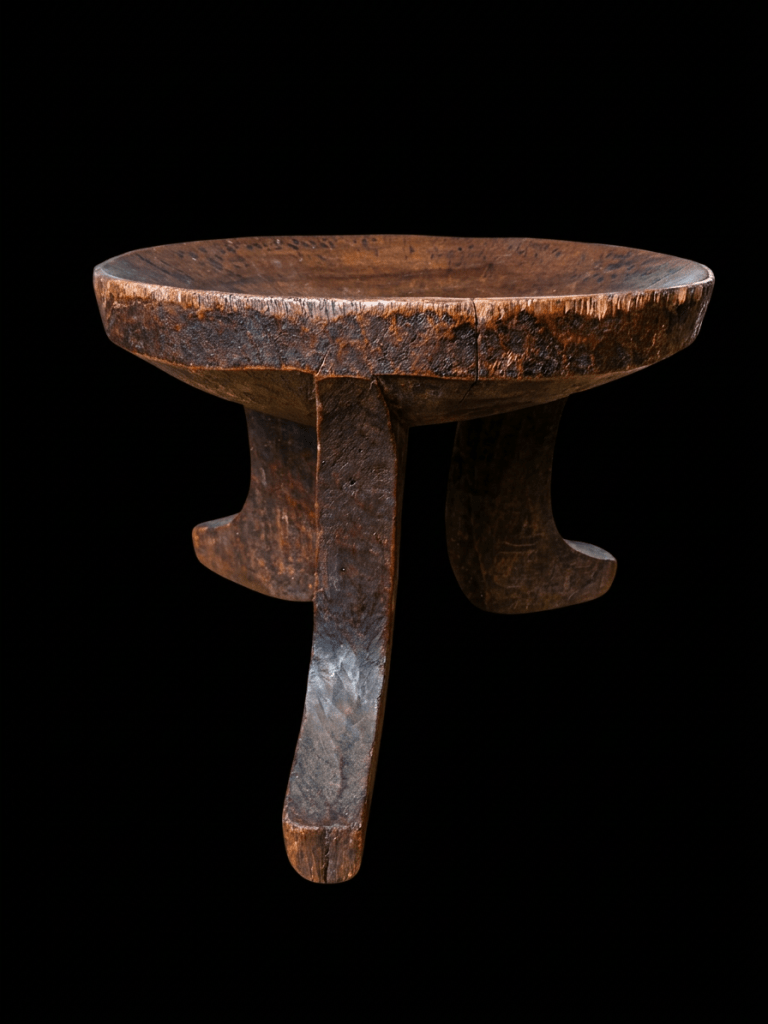
Antique hand-carved African tripod stool known as a Berchuma, made by the Oromo people, crafted from a single piece of hardwood with a distinctively dished, bowl-shaped seat, Ethiopia
Traditionally hand-carved by the Oromo or Jimma people from a single block of indigenous hardwood. Originally used as a functional seat for elders, often symbolizing status, age, and wisdom. Features a concave top and curved, tripod legs. This old and authentic piece displays signs of use and age, with a weathered patina and minor wear, which contributes to its unique history and character.
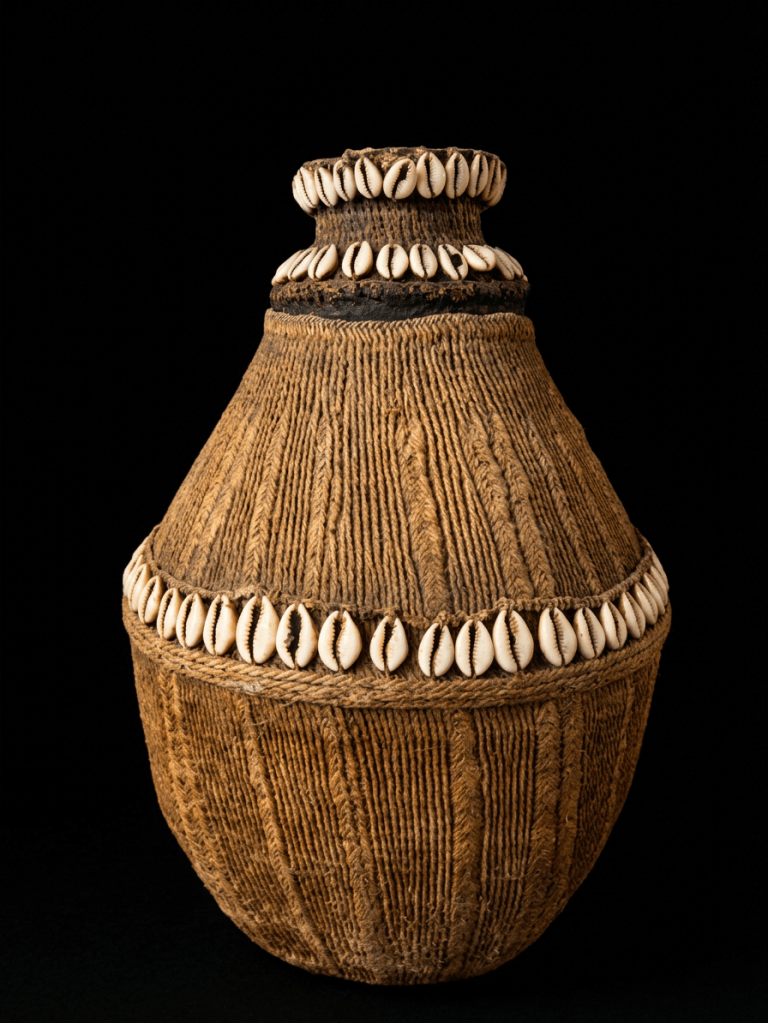
A traditional Borana Gorfa, a hand-woven milk container specifically crafted by the Borana pastoral people of Southern Ethiopia
Constructed from woven vegetable fibers, such as sisal, designed to be durable yet lightweight for nomadic migration. The container is heavily decorated with cowrie shells, which are symbols of fertility, abundance, and social status within Borana culture. Beyond functionality, these containers are used in ceremonies and embody traditions passed down through generations, often requiring repairs to maintain their longevity.
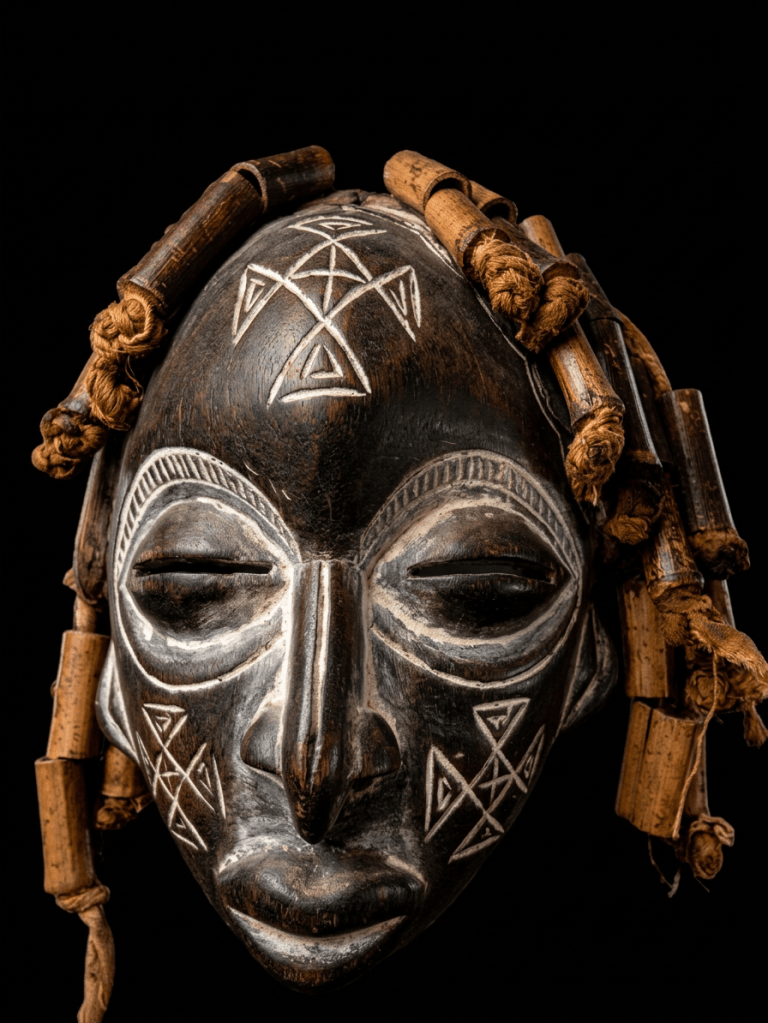
Traditional African mask, likely originating from the Chokwe people, Angola or the Congo
It is a hand-carved wooden mask, often called a Pwo (woman) or Chikunga (chief) mask depending on the specific tribal context. The mask features stylized facial scarification patterns and hair made from natural fibers or hollow bamboo tubes. These masks are traditionally used in initiation rites or celebratory dances to represent ancestors or spirits.
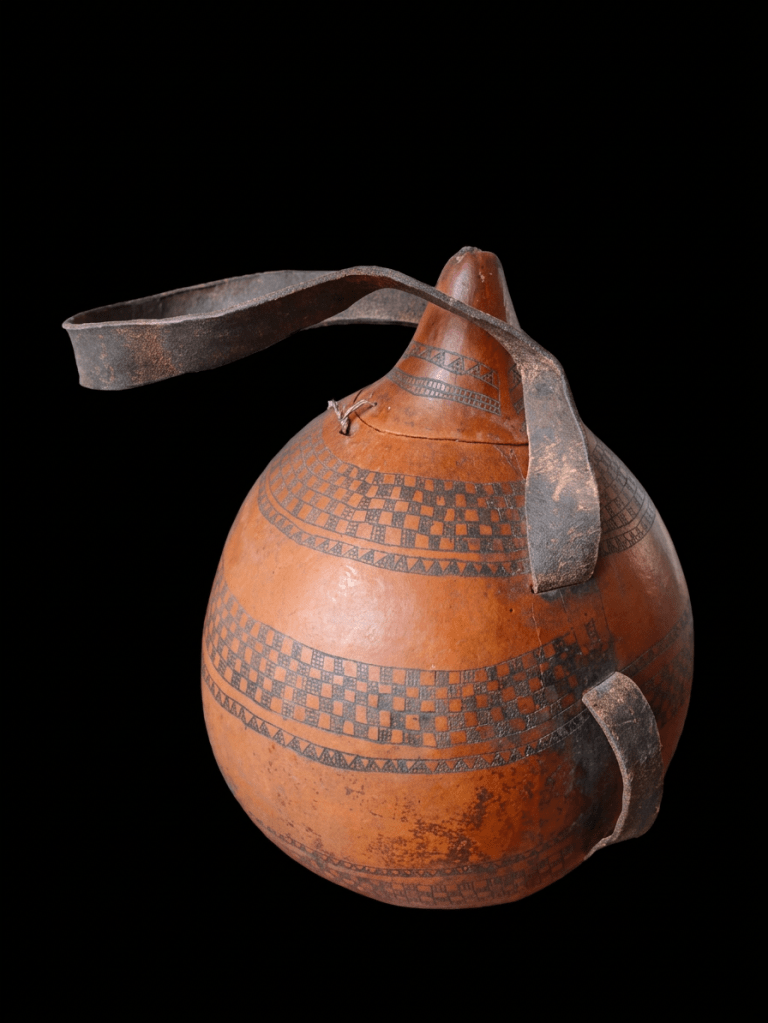
A vintage African calabash gourd vessel, likely used historically for carrying water or storing grains, Mali
It is made from a dried gourd plant with etched geometric patterns. It includes a leather strap for carrying and a separate lid, which may be made of wood or gourd material. Such items are cultural artifacts traditionally grown and shaped by hand across various African regions.
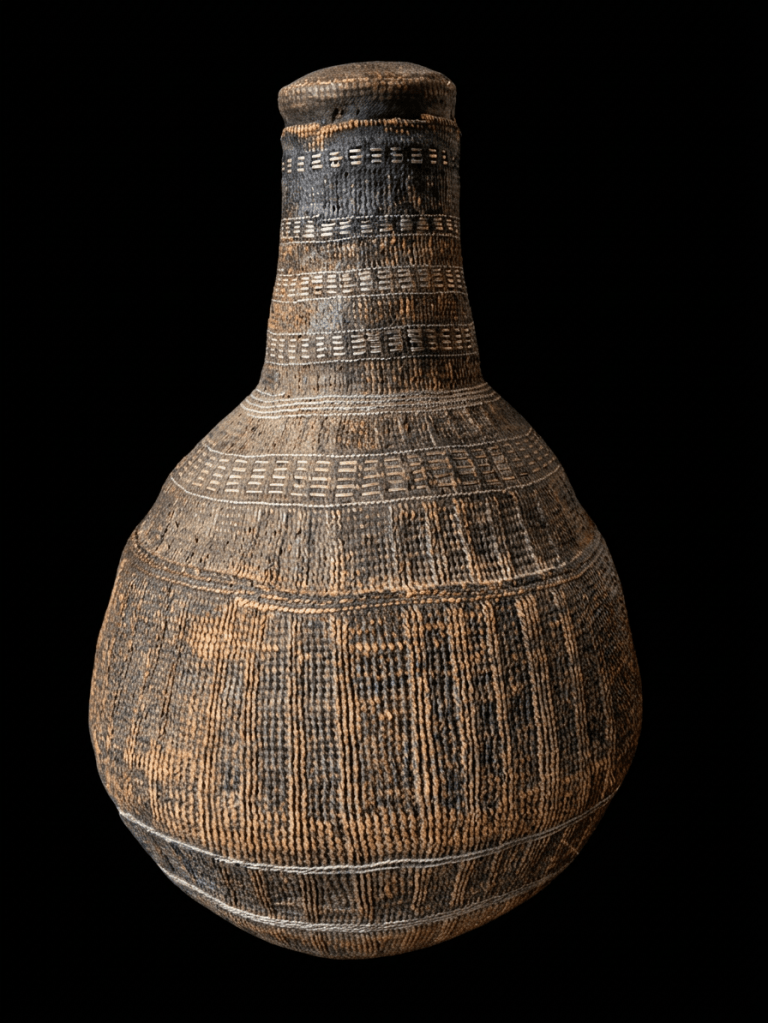
A traditional vintage Ethiopian Borana Gorfa milk container, Southern Ethiopia
It features a woven sisal fiber body adorned with intricate aluminum or silver wire patterns. Traditionally, these hand-crafted vessels were used for storing milk and were waterproofed with beeswax.
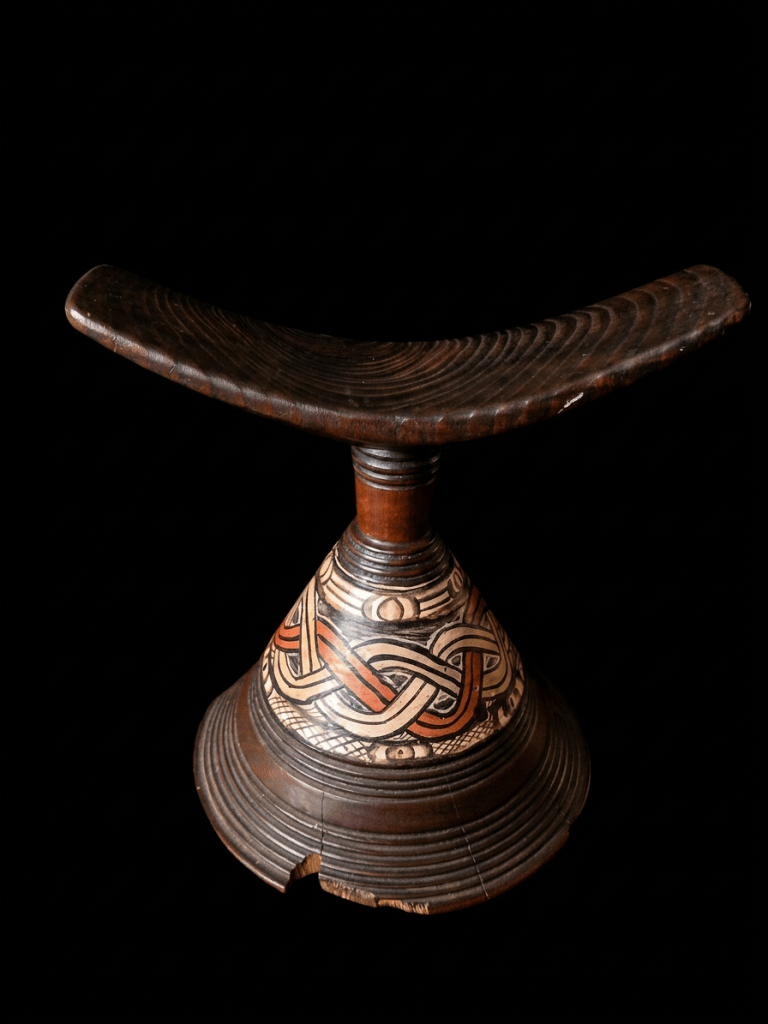
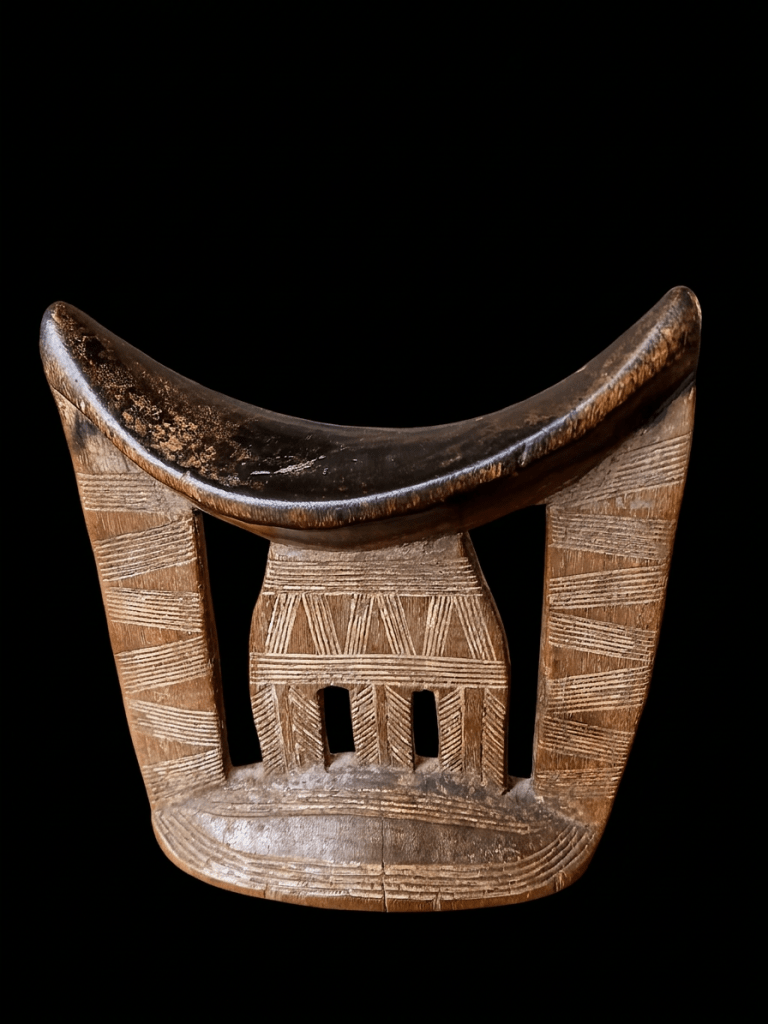
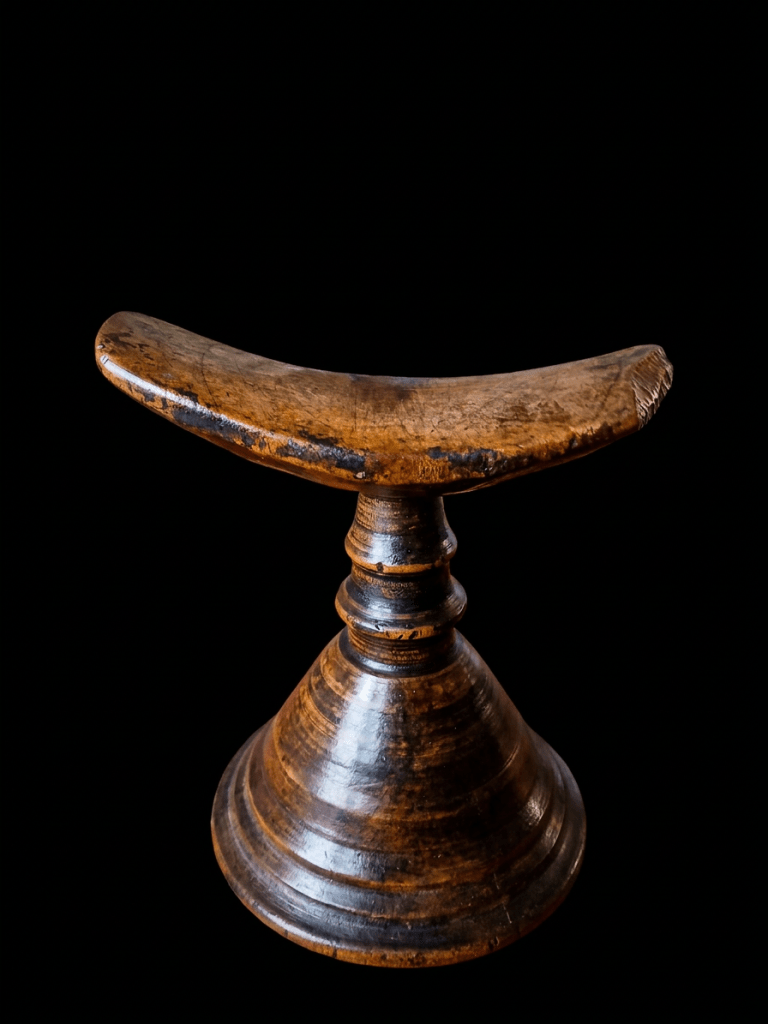
Ethiopian wood headrests, often referred to as a pillow, used historically to protect elaborate hairstyles while sleeping, Southern Ethiopia
Commonly associated with the Oromo or Gurage peoples from Southern Ethiopia. Used as a sleeping pillow to keep the head elevated and protect hairstyles, and sometimes as a stool. Hand-carved from a single piece of wood featuring a curved support top and a conical base decorated with incised geometric designs. These are considered ethnographic collectibles, valued for their artistry, age, and cultural significance
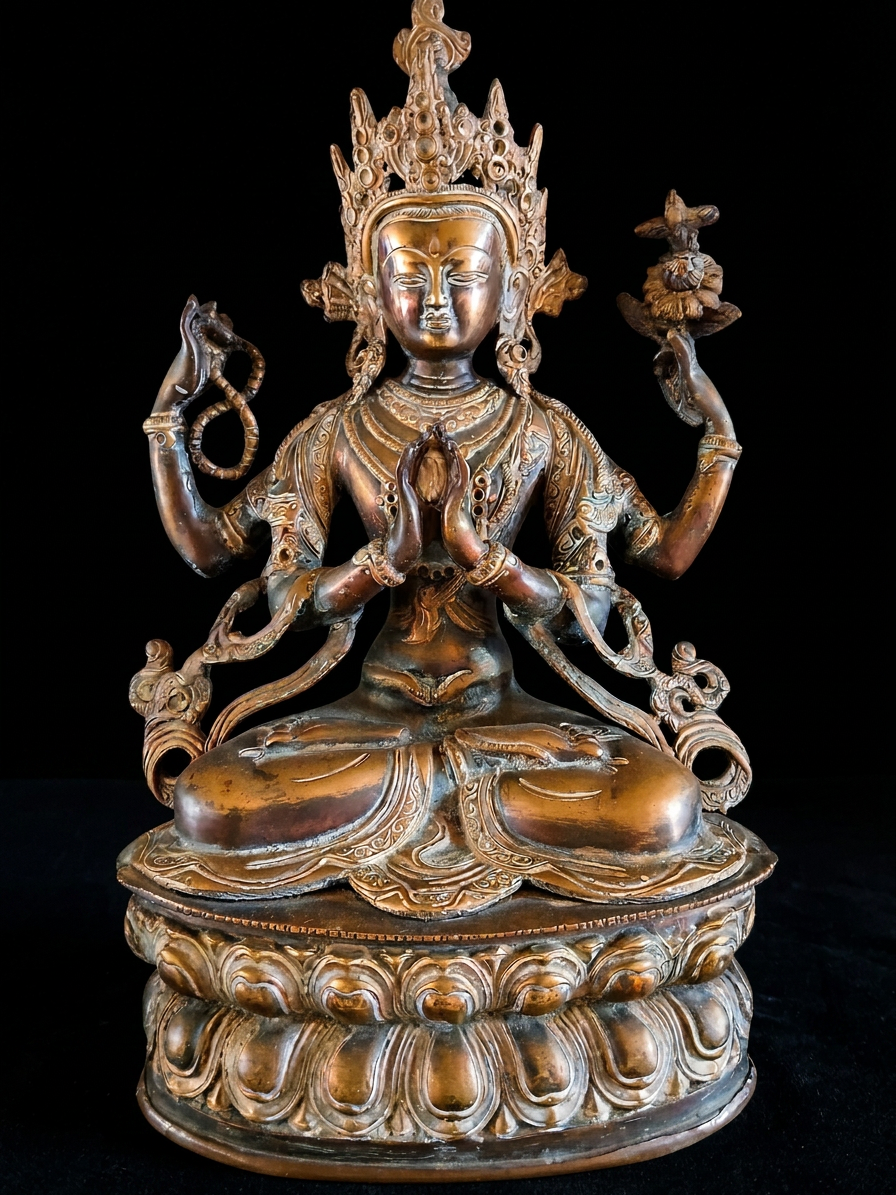
This bronze statue depicts the four-armed Avalokiteshvara (also known as Chenrezig), the bodhisattva of infinite compassion, Tibet
The statue features the deity seated on a double lotus base in a meditative posture. The primary pair of hands is folded in front of the chest in a mudra typically enclosing a wish-fulfilling jewel. The secondary arms are raised, holding traditional attributes such as a mala (prayer beads) in the right hand and a lotus flower in the left. The deity is adorned with an intricate crown and jewelry. The piece is crafted from bronze, often described as Tibetan or Sino-Tibetan in style.
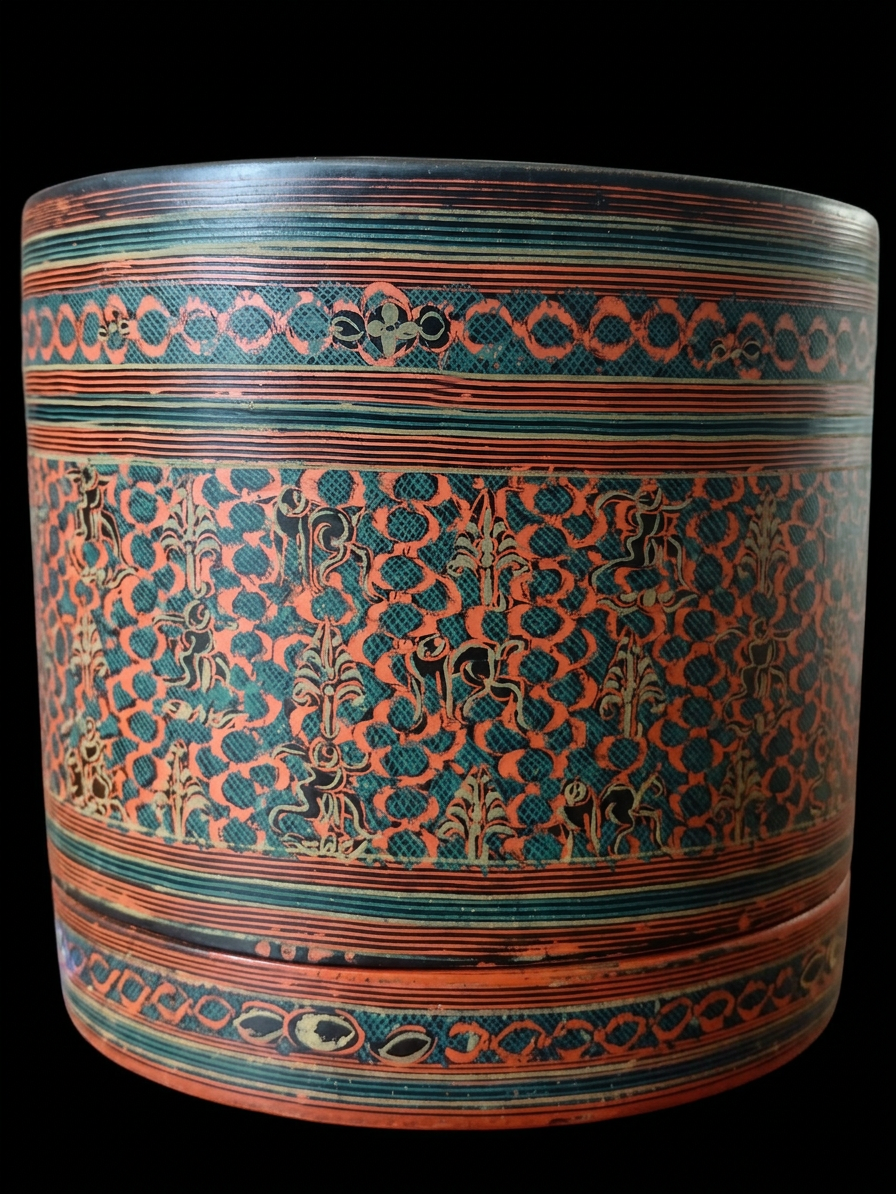
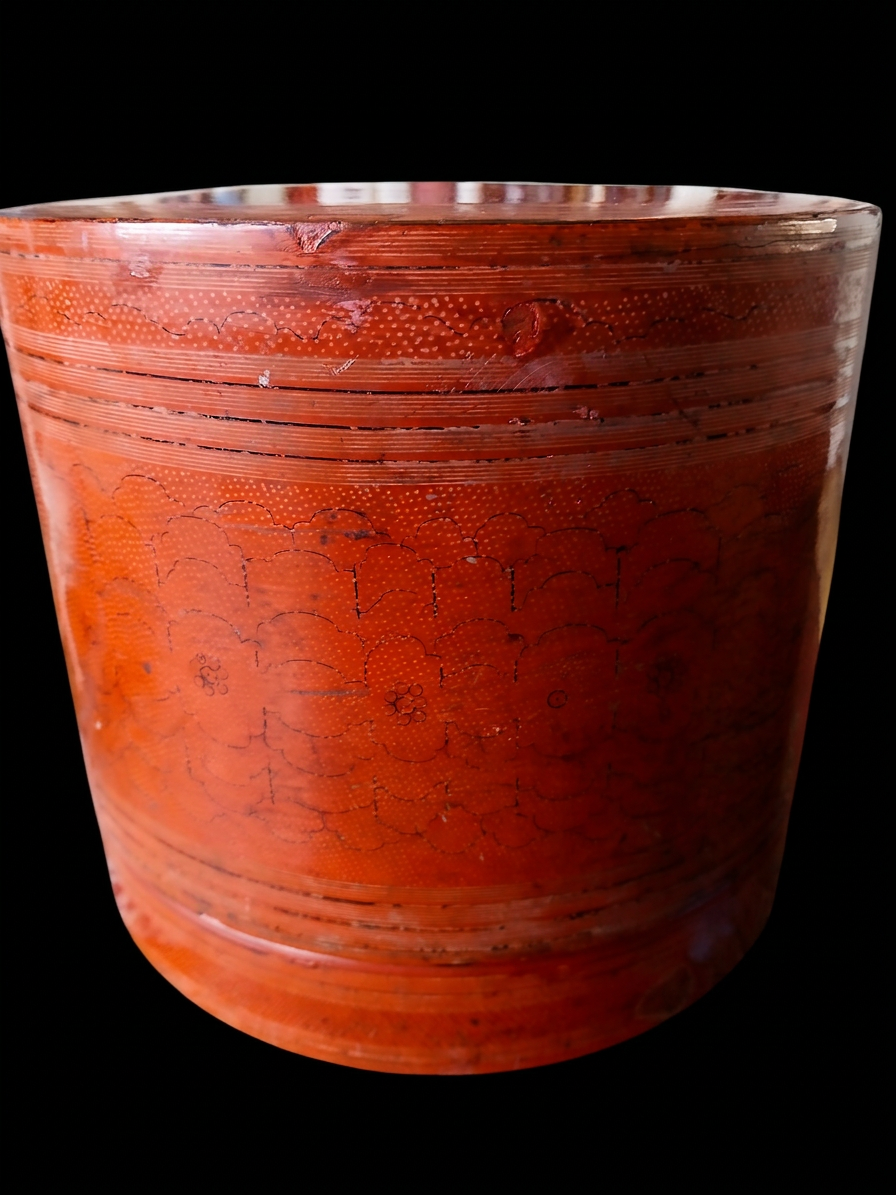
Vintage Burmese lacquerware betel box, also known as a kun-it, typically decorated with traditional motifs, Burma
These containers are traditionally crafted from bamboo or woven strips and coated with multiple layers of lacquer. They often feature intricate hand-painted designs in orange-red, green, yellow, and black hues, frequently depicting scenes from local culture or geometric patterns. Historically, these boxes were used to store betel nut, lime, and leaves for chewing, serving as a significant item of hospitality in Burmese homes.
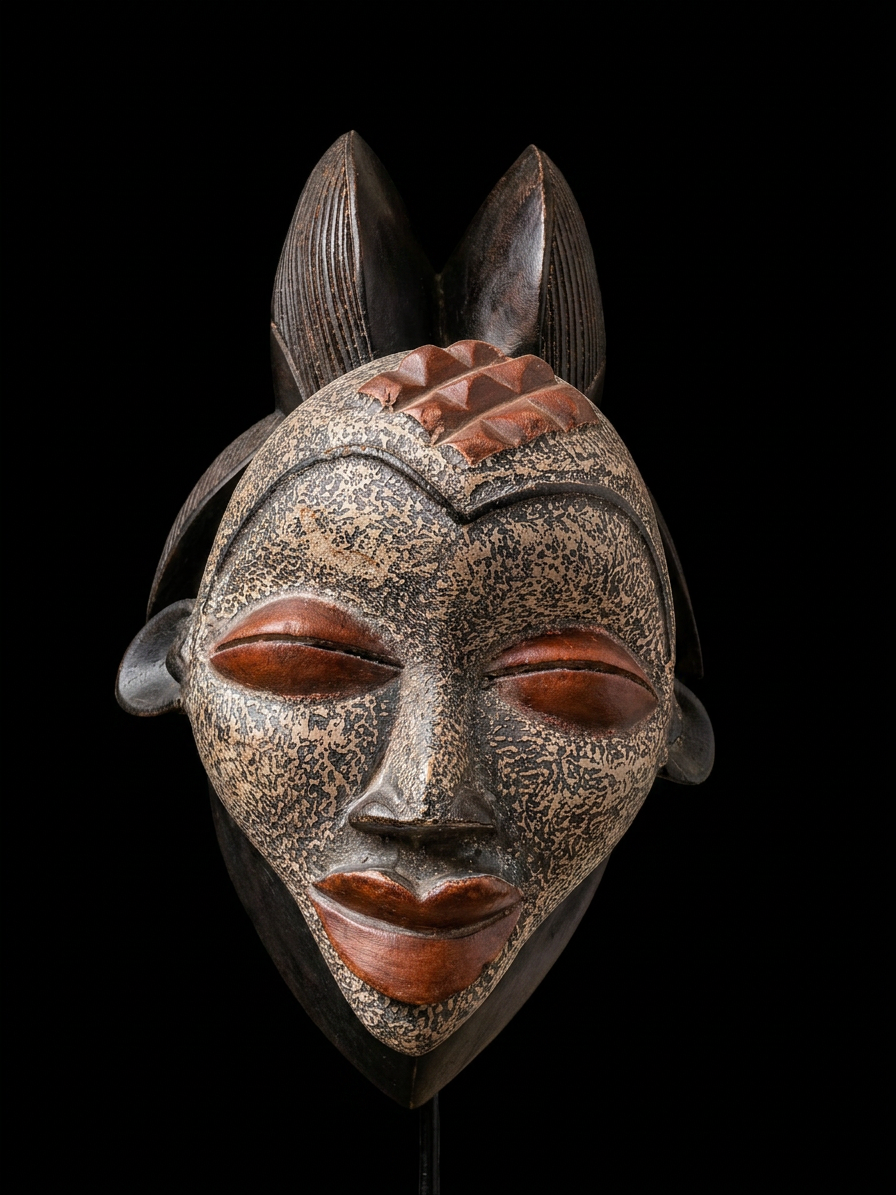
Punu Maiden Spirit Mask, traditionally carved from wood and featuring kaolin clay pigmentation, Gabon
The mask originates from the Punu people of Gabon in West Africa. Known as a Mukudji mask, it represents a spirit of a deceased ancestor, often depicted as a beautiful maiden. Typically features a white face (often kaolin clay), arched eyebrows, and a high, elaborate coiffure.
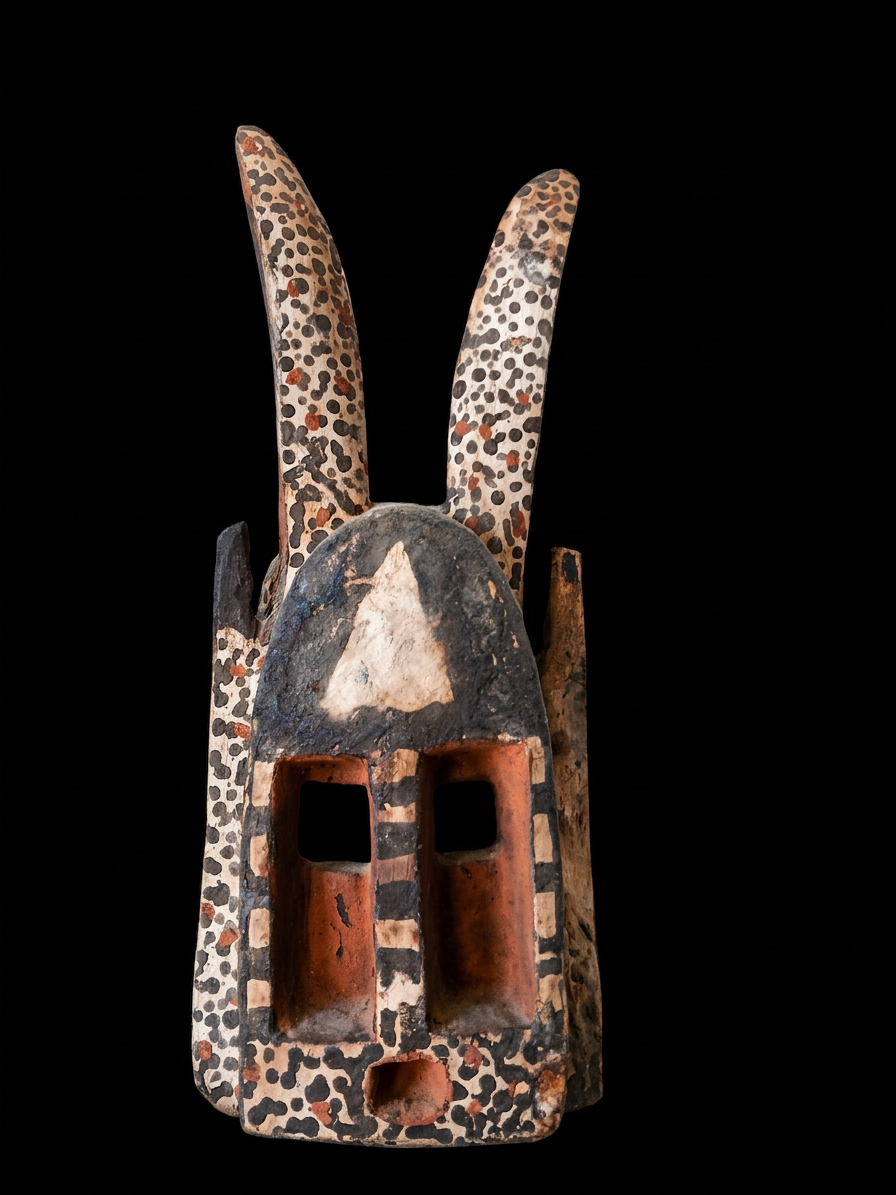
A Dyommo (hare) mask made by the Dogon people, featuring a distinct polychrome spotted pattern, Mali
A Zoomorphic mask representing a hare, characterized by long, upright ears and rectangular eye cutouts.These masks are traditionally hand-carved from wood and painted with natural pigments. The dyommo mask is typically used in ceremonial dances by the Dogon people of Mali in West Africa.
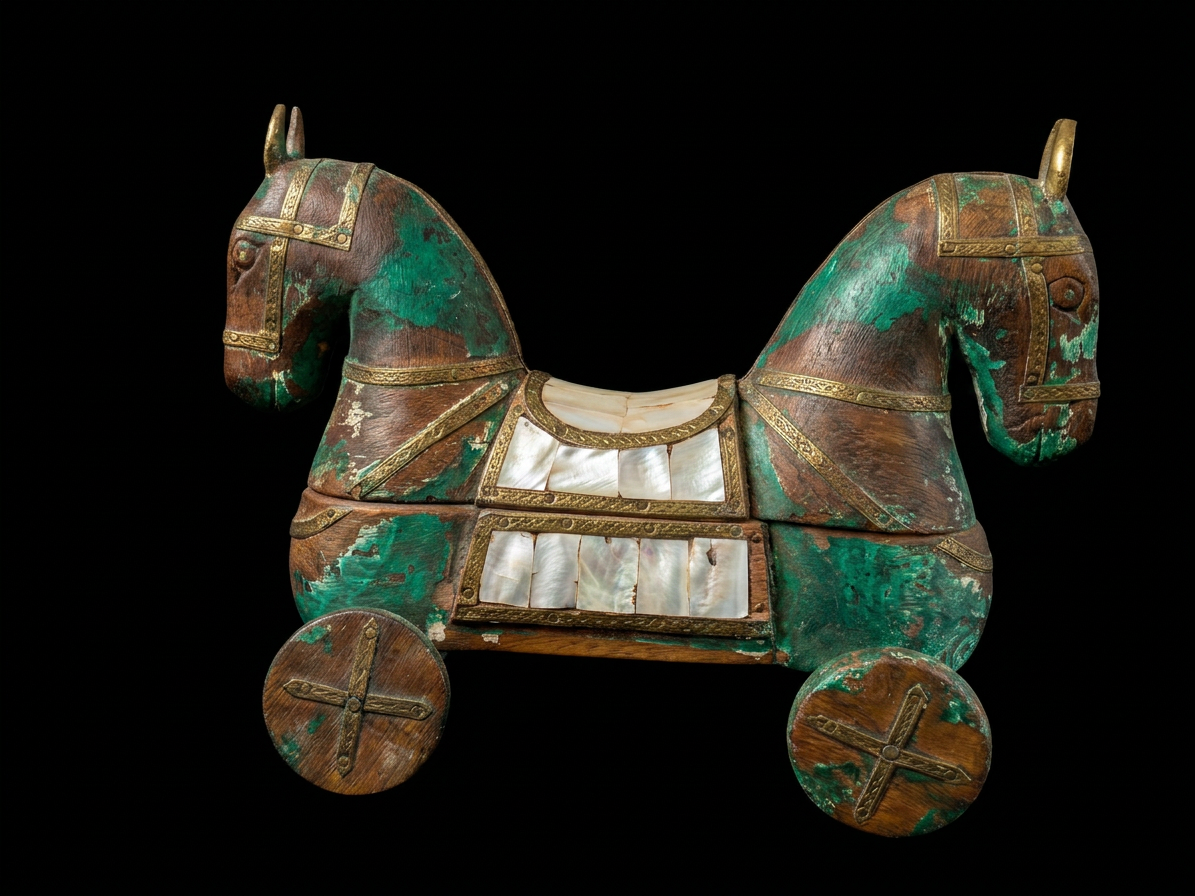
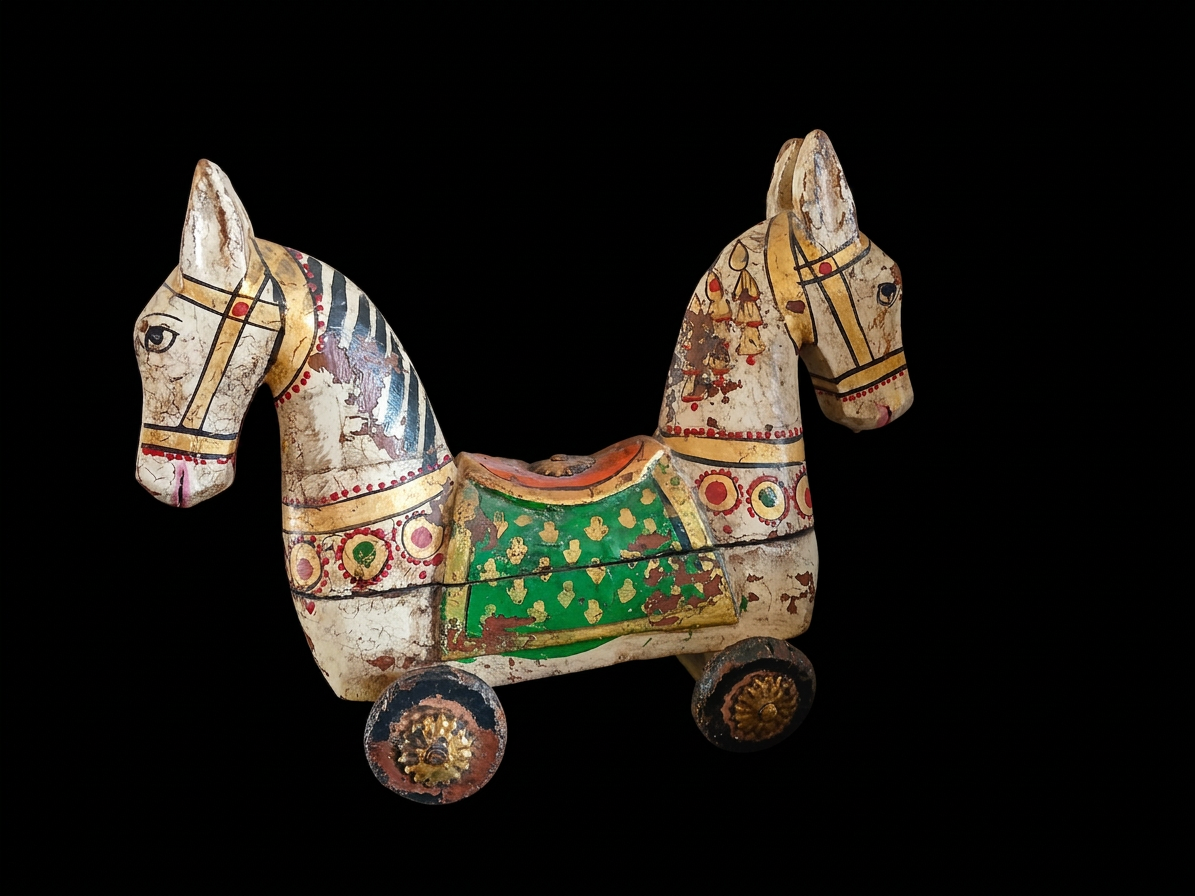
Vintage handcrafted wooden spice box from Rajasthan, shaped like a two-headed horse or “Ghodi” wedding horse, India
Historically, these functional decorative items were used to store spices (masala) and often feature intricate hand-painted details, rustic finishes, and small wooden wheels.These decorative figurines originate from Rajasthan, India, and are frequently associated with wedding traditions
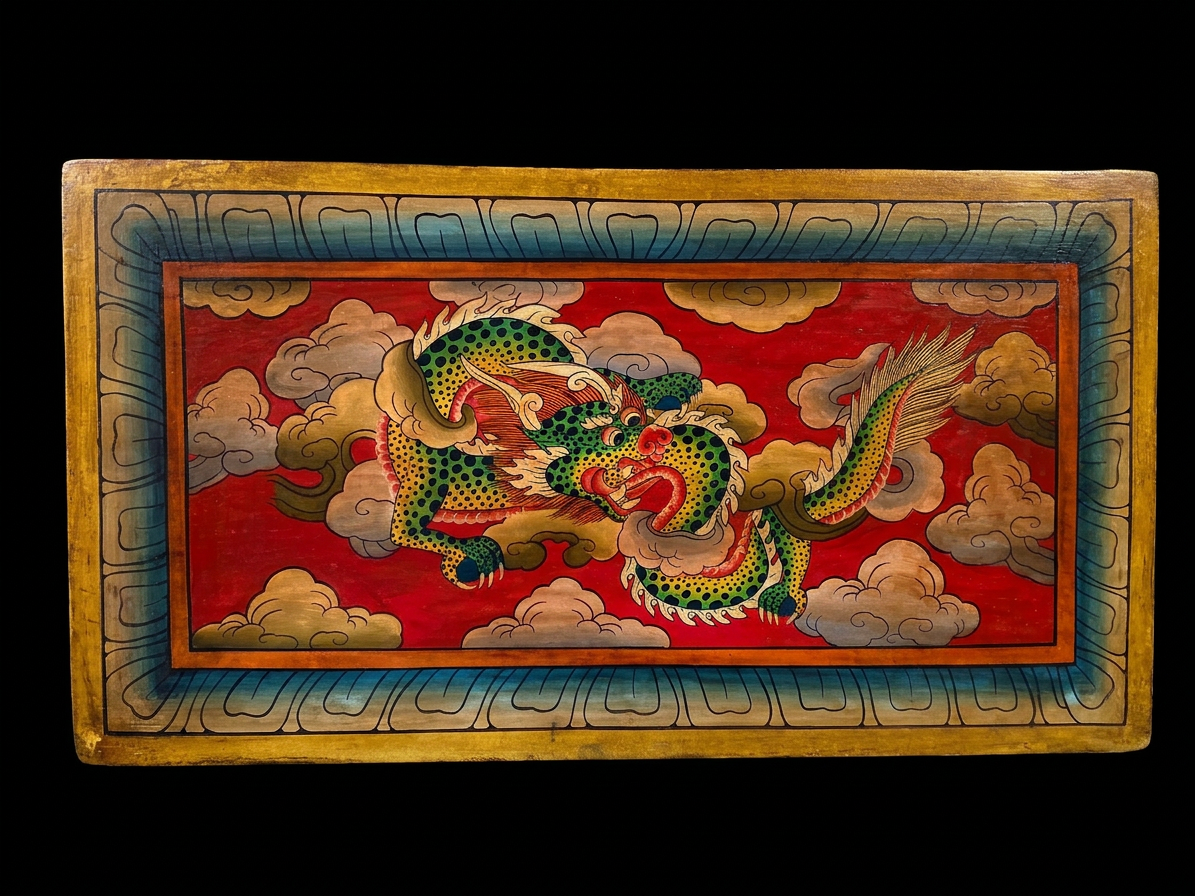
Tibetan-style hand-painted wooden panel featuring a dragon motif, Bhutan
The artwork showcases a vibrant, multicoloured dragon, a traditional symbol often found in Tibetan Buddhist art and folk culture. The panel features a red background with clouds surrounding the dragon, enclosed by a blue and orange border. Such panels are frequently used as decorative elements on furniture pieces, including benches, chests, and altar cabinets. In this case a small fold out table.
 Syder Travel