The Minoans are best known for their huge labyrinthine palaces, the most famous at Knossos, where Theseus slew the Minotaur. Knossos and all of the Minoan sites we visit have their own unique and characteristic charm and elegance, demonstrated in a lively and free artistic expression, and an obvious delight in realistic decoration. We start the tour on the beautiful, tiny island of Santorini, ‘Pompeii of the Aegean’, buried suddenly during the cataclysmic eruption of Thera – which signalled the ‘beginning of the end’ of Minoan civilization. In Crete we continue to trace the story of the Minoans, whose writing, organization and ambition had a profound influence on the development of ancient Greece, and thus the western world.
Archives
All posts by patricksyder
Central Italy 20 – 28 May 2017
Tour available
Draft Itinerary (To be confirmed)
DAY 1 ARRIVAL AT PISA AIRPORT
Arrival at Pisa Airport and Transfer to Hotel in Florence .
Day 2 FLORENCE
In the morning visit Basilica di San Lorenzo with its Medici Chapel. Afterwards visit of San Marco. San Marco is the name of a religious complex in Florence, Italy. It comprises a church and a convent. The convent, which is now a museum, has three claims to fame. During the 15th century it was home to two famous Dominicans, the painter Fra Angelico and the preacher Girolamo Savonarola. Also housed at the convent is a famous collection of manuscripts in a library built by Michelozzo then on to the visit of the Galleria dell’ Accademia, famous for the Michelangelo’s Sculptures. A must is also the visit of the Duomo and the Baptistery! Walk to the Santa Maria Novella church. During the day lunch in a local Restaurant. Free dinner. Overnight stay.
Day 3 FLORENCE
Morning Walking tour in Florence. Visit of the Bargello museum. The Bargello, also known as the Bargello Palace, Museo Nazionale del Bargello, or Palazzo del Popolo (Palace of the People) is a former barracks and prison, now an art museum Then walk to Santa Croce. This monument is truly unique, not only for the purity of the Gothic style, but also for the famous works of art it contains ans its historical importance. The most famous funeral monuments: the tomb of Michelangelo, Galileo, Macchiavelli. In the afternoon visit of Palazzo Vecchio and guided tour of the Uffizi. Lunch in a local Restaurant. Afternoon at leisure for the last Italian Shopping ! Free Dinner. Overnight stay
DAY 4 CHIANTI AREA – OVERNIGHT SIENA
After breakfast departure to Chianti Area, one of the most beautiful and famous area of Tuscany. The rolling hills of Chianti are designed by miles and miles of vineyards, each season color in a unique landscape. Green, purple, red and yellow are the colors that shine on these hills. Today you will visit Greve in Chianti famous for the wine cellars. Greve itself has some great wine bars. You can also add a visit to the Wine Museum. Another location easily accessible and indisputable charm is Panzano, one of the most populous of Chianti. This small town, as well as for its wine, is famous for its Florentine steak. Here indeed is the butcher Cecchini, where he praises the Divine Comedy while you cut the meat. During the day, wine tasting and brunch in a wine cellar. Continuation to Siena. Free dinner and Overnight stay
DAY 5 FULL DAY SIENA
Breakfast in hotel. Siena a magnificent city, that has the aspect of a medieval city. With its yellowish-brown building (from which the color “Siena” is named) and encircled by massive ramparts the city extends over three converging clay hills at the very heart of the high Tuscan plateau. Visit of the exciting maze of narrow streets, lined with tall palaces and patrician mansions, which come together on the Piazza del campo, one of the most vast medieval squares of Europe, heart of the city, and is the venue twice annually for the popular festival Palio. We will also be visiting the dome with its splendid mosaic pavements. Lunch in a local restaurant. Afternoon at leisure. Overnight stay in Siena
DAY 6 EXCURSION PERUGIA
Breakfast in hotel. Departure to Perugia a well-known cultural and artistic centre of Italy. The famouspainter Pietro Vannucci, nicknamed Perugino, was a native of Città della Pieve near Perugia. He decorated the local Sala del Cambio with a beautiful series frescos; eight of his pictures can also be admired in the National Gallery of Umbria.. Perugino was the teacher of Raphael, the great Renaissance artist who produced five paintings in Perugia (today no longer in the city) and one fresco. Another famous painter, Pinturicchio, lived in Perugia. Galeazzo Alessi is the most famous architect from Perugia. The city symbol is the griffin, which can be seen in the form of plaques and statues on buildings around the city. Guided visit of Perugia. Lunch in a local Restaurant. Return to the hotel in Siena. Overnight stay
DAY 7 VOLTERRA & SAN GIMINIAMO – OVERNIGHT PISA
Breakfast in hotel and departure by coach to Volterra, known to the ancient Etruscans as Velathri, to the Romans as Volaterrae, is a town and comune in theTuscany region of Italy.. Guarnacci Etruscan Museum, with thousands of funeral urns dating back to the Hellenistic and Archaic periods. Main attractions are the bronze statuette “Shadow of the Night” and the sculpted effigy of an Etruscan couple in terra cotta. The Etruscan walls, including the well-preserved Porta dell’Arco (3rd-2nd centuries BC) and Porta Diana gates. Continuation to San Giminiano,, a medieval city surrounded by gently-rolling countryside dotted with wines and olives. Its 14 grey stone towers set on a hilltop are enclosed within an outer wall including five gates. Lunch in a local Restaurant and visit. Continuation to Pisa Free dinner and overnight stay in Siena
DAY 8 VISIT THE ‘SQUARE OF MIRACLES’ IN PISA & LUCCA
Breakfast at the hotel. We will take the road towards Pisa. Discovery of the main monuments of this city which, in the Middle Age has dominated the Western Mediterranean due their powerful fleet: the cathedral, the baptistery and the leaning tower of Pisa…one of Italy’s symbols. Continuation to of Lucca, ancient and medieval city. Lunch in a local Restaurant. Visit the rectangular grid of its historical center preserves the Roman street plan, and the Piazza San
Michele occupies the site of the ancient forum. Traces of the amphitheater can still be seen in the Piazza dell’Anfiteatro. Lucca was the site of a conference in 56 BC which reaffirmed the superiority of the Roman First Triumvirate. Return to the hotel in Pisa. Free Dinner and Overnight stay.
DAY 9 DEPARTURE
Breakfast in hotel . Free time until departure transfer to airport Pisa.
ARIVA II GULET
The “Ariva II” gulet is a great 25 meter long, wooden sailing boat, built with the most modern techniques and boasting a traditional design.Built by the most prestigious Turkish shipyard in Bodrum, Ariva II is a classic Turkish square stern gulet: it is a very robust and seaworthy boat, with teak bridge and ketch sail plan (two masts) with gaffs, jib and fore sail.
The onboard spaces available to guests are superior than the usual sailing boats. The stern deck is used as a covered veranda with an awning, a table and a sofa with cushions for eating or relaxing outside. At the center of the boat, there is a large indoor room with dining table and bar, lounge area with TV, VCR, Hi-Fi stereo and a variety of games. This room gives access to the cabins below deck, all equipped with double bed (two with double bed and one with single bed), private bathroom with shower and hot water, and air conditioning. The kitchen is located on the upper deck with access from the indoor room. The bow offers a comfortable sun deck, a sofa with pillows which is very much appreciated by those who love sunbathing and the “sweet doing nothing”.
During the Ottoman Empire, these boats were used for transporting both goods and persons, sailing the Aegean Sea, from the Bosphorus to the Black Sea, from the Turkish coast to Greece and the Adriatic Sea, the Ionian Sea, all Sicilian islands, the Aeolian and Egadi Islands, along the Tyrrhenian Sea to Sardinia, the Pontine Islands, the Tremiti and Corsica.
Today’s release of pictures showing damage to the ancient desert city of Palmyra by the BBC from Reuters news agency are in some ways a huge relief. A relief in that the landscape of the city as a whole remains intact. It could have been far worse. However the specific monuments that were targeted as in the Temples (apparently idolatrous to IS beliefs) and the once stunning Triumphal Arch (idolatrous? really…..) have been utterly destroyed. Whilst the BBC’s intention was to provide information to the viewer I dont see how one can get a complete idea of the scale of destruction unless one has something to compare it against.
I have done that here. Please forward this to anyone you feel would be interested to see. There are links below to help.
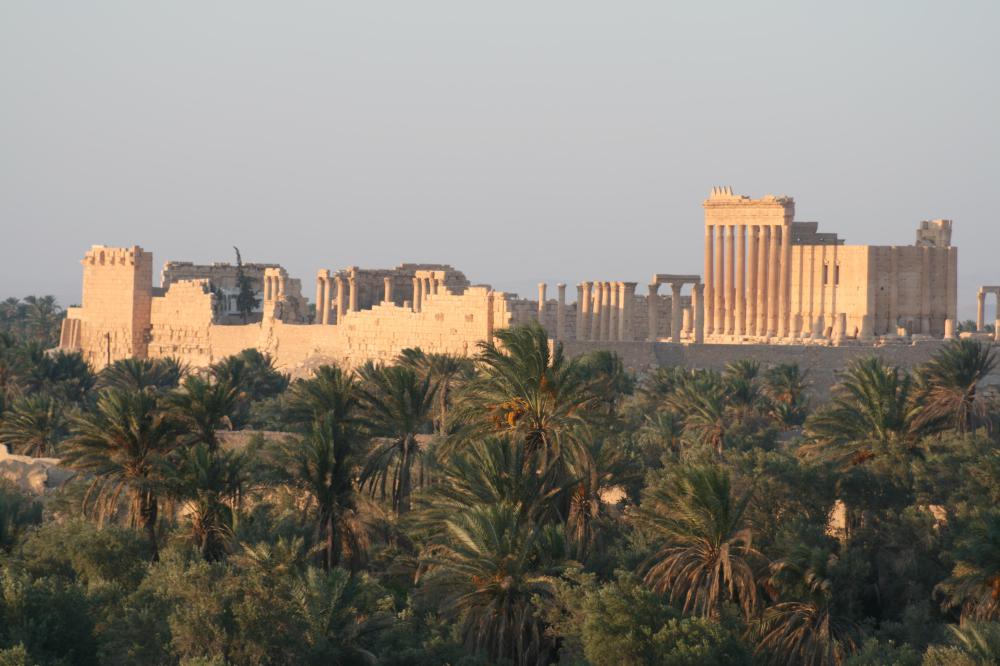
The Temple of Bel complex. Picture was taken in May 2009. Only a doorway now remains…….
The Temple of Bel. The picture was taken in May 2009
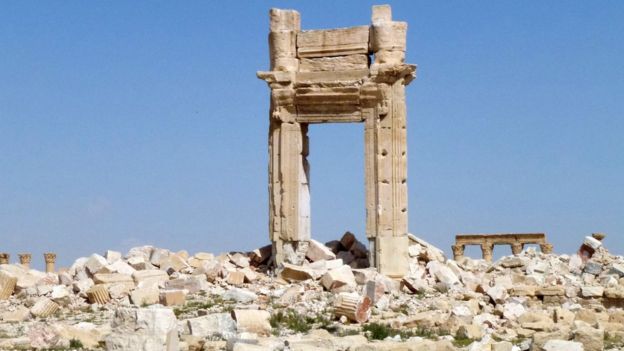
The Temple of Bel, March 2016. Only the doorway remains standing.
The Triumphal Arch. The picture was taken in May 2009
The Triumphal Arch, March 2016. Nothing remains
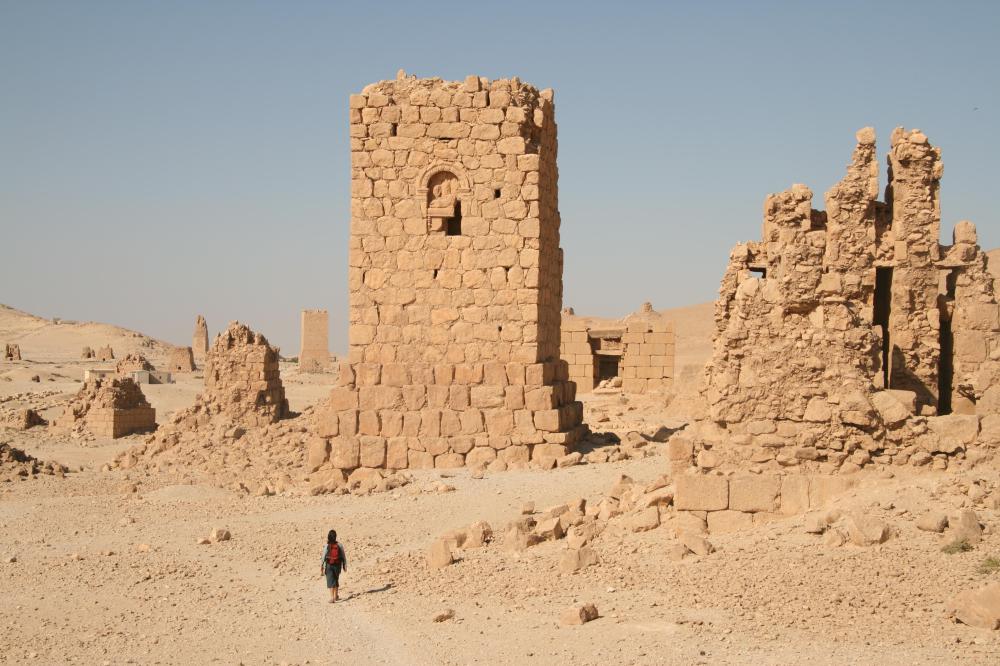
These evocative funerary towers had stood for over 2000 years before ISIS dynamited all of them last year.
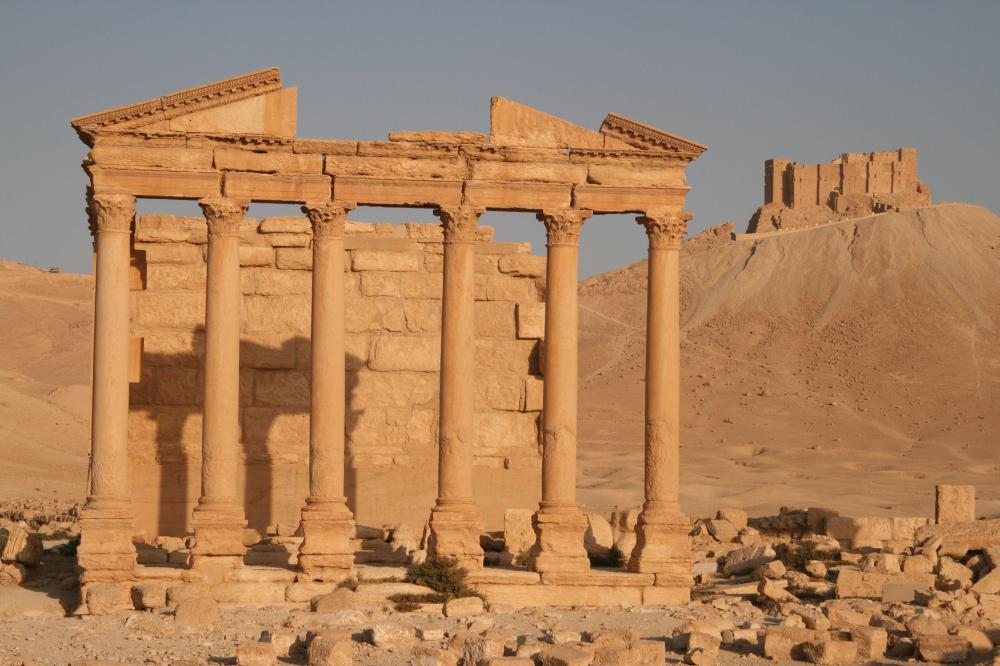
As was the Temple of Baalshamin, now completely destroyed

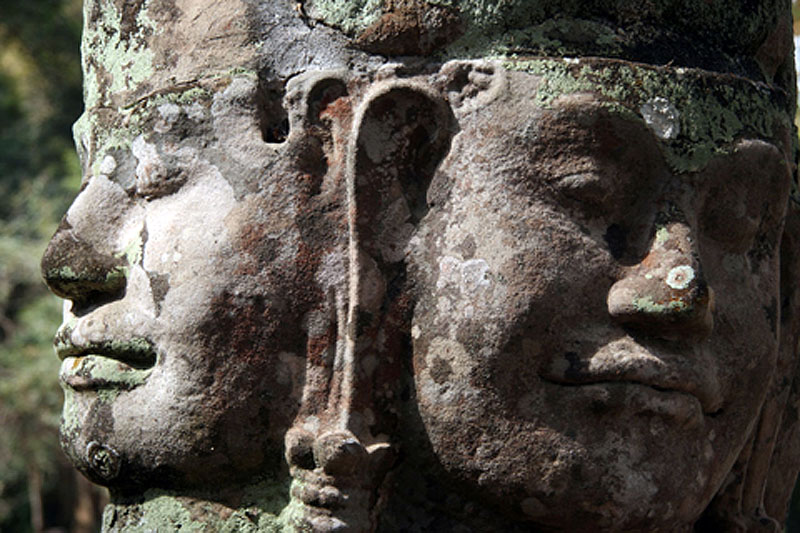
Striking Buddha faces at the ethereal Bayon Temple, Angkor
A fabulous journey through the extraordinarily friendly country of Cambodia and to some of it’s lesser visited regions. We witness the great legacy of the Khmer civilisation with the splendour and awesome collection of temples at Angkor, a wonderful climax to an the tour. We start in Phnom Penh, the lively capital with many French colonial buildings, busy markets, art galleries, temples and museums. In Kampong Thom we visit a stunning rarely visited pre-Ankorian temple plus traditional villages and markets as we journey north into the Preah Vihear province. We also take a boat trip on the Tonlé Sap Lake, the largest freshwater lake in Southeast Asia and officially designated as a UNESCO Biosphere Reserve. We include the colonial era architecture and riverside setting of laid-back Battambang
Samson Tilahun (Sammy) is my guide (and a dear friend) in Ethiopia.

He graduated from Hawassa University as well as the Institute of Tourism in Addis Ababa, specializing in Ethiopian History & Cultures, Agriculture and Tourism. He speaks English, Amharic and Oromifa (the national and local language of Ethiopia). He has lead tours for numerous passengers including journalists, photographers and film crews from all over the world. Sammy has recently been acknowledged in a published novel by Manola Lizy titled “Ethiopian Highlands” and also in an article by Anna Murphy titled “Holy days and Highland Rock Churches of Ethiopia”. With Sammy’s passion for History, Archaeology, Photography, Anthropology and Birdwatching combined with his incredible guiding experience, you will have an unforgettable adventure!
Could open conflict now be one step closer between the two big regional powers in the Gulf? This week has seen tensions between Saudi Arabia and Iran rise to dangerous levels following the Saudis’ execution of a Shia cleric and the subsequent storming of the Saudi embassy in Tehran by an angry mob.
The BBC’s Frank Gardner, whose attempted murderer was also executed by the Saudis last weekend, examines the historic enmity between the two regimes and assesses whether they can ever settle their differences.
In Saudi Arabia, a country that last year put to death a record 153 convicted prisoners, there has rarely been a more controversial execution in recent years. Amongst the 47 condemned men whose sentences were carried out simultaneously on 2 January one name stood out from all the others.
Sheikh Nimr Al-Nimr, a firebrand Shia cleric and popular figurehead for thousands of disaffected Saudi Shias living in the country’s Eastern Province.
Arrested in 2012 in the wake of the Arab Spring uprisings and charged with “disobedience to the ruler” and bearing arms, Al-Nimr’s supporters insisted he only ever called for peaceful protest and fair rights for the Shia minority. His critics, including Sunni hardliners, called him a terrorist, while the Saudi government suspected him of being an agent of Iran.
Of the 47 people executed that day, 43 were Sunnis and most of those were extremists. One was the last surviving criminal from a gang that attacked our BBC film crew in Riyadh in 2004, killing my Irish cameraman Simon Cumbers and putting six bullets into me and crippling me for life.
Yet it was the death of the Shia cleric Al-Nimr that was always going to be the most inflammatory in a region already beset with sectarian fault lines. There have been angry protests by Shia in Bahrain, Iraq and Lebanon.
In Iran, a country ruled since 1979 by Shia clerics, and which reportedly executed nearly 1,000 of its own people last year, the Supreme Leader, Ayatollah Khamenei said the Saudi leadership would face “divine revenge”.
Optimists hoped that was a subtle way of absolving Iran from having to take any action itself.
But within a day an Iranian mob had vented its fury on the Saudi embassy in Tehran, setting it on fire and prompting Riyadh to sever all diplomatic, trade and transport links with Iran. For the hardliners in the Iranian regime, wary of their country’s coming return to the world stage, this was probably a relief.
But for moderates and pragmatists keen to see last year’s nuclear deal ratified and billions of dollars unfrozen, the embassy storming was an embarrassment they could have done without. One by one, Riyadh’s allies – Bahrain, Sudan, Kuwait, Qatar and the UAE – have taken their own punitive measures against Iran. Saudi-Iranian relations are close to their lowest ebb for 30 years.
So where did this Saudi-Iranian hostility spring from and is it all about religion?

As a nation, Saudi Arabia has only been in existence since 1932 but the land it governs – most of the Arabian Peninsula – is the birthplace of Islam and home to its two holiest shrines, in Mecca and Medina.
In the early years of the Islamic conquests in the 7th Century AD Muslim armies burst out of Arabia to defeat the Persians, ending their Sasanian Empire. Later on in that century, following the death of the Prophet Muhammad, a dispute erupted over who should succeed as “khalifa”, or caliph, to rule the burgeoning Islamic empire.
A breakaway group believed it should have been Ali, the Prophet’s cousin and son-in-law, who was assassinated and his two sons denied the succession. The group became known as “Shia Ali”, the party of Ali, and Shias still harbour this historic grudge. Today they are in a majority in Iran, Iraq, and Bahrain.
But in more recent times, the Saudi-Iranian rivalry has been primarily about power play, sparked by Iran’s Islamic Revolution in 1979.
Before then, while the Shah of Iran was on the throne, relations were cordial and the Arab Gulf states were content to let Iran’s navy act as “the policeman of the Gulf”. Hence the American term coined at the time, calling it “the Persian Gulf”. Western expatriates living in either Iran or Saudi Arabia enjoyed a relatively relaxed, liberal lifestyle with frequent alcohol-fuelled parties in both affluent north Tehran and in the housing compounds of Dhahran.
That all changed with the Iranian revolution. Suddenly, a competition emerged to prove which country was most worthy of leading the Islamic world. As Iran’s new rulers vowed to export their Islamic Revolution and undermine what they saw as corrupt, unworthy princes, Saudi Arabia outdid itself to crack down on anything deemed to be un-Islamic.
The final straw was the brief storming and occupation of the Grand Mosque in Mecca by a dissident Islamic group. The Al-Saud regime was shaken to the core and decided its key to survival was to cement its ties with the austere Wahhabi religious establishment, giving the clerics a huge say in areas of public life like education, justice and social mores.
Tension spikes
In practice this has led to a sort of quasi-arms race for influence, with both Iran and Saudi Arabia exporting and promoting their own versions of Islam, in direct competition with each other
Iran’s allies now include Hezbollah in Lebanon, Syria’s President Assad, and the powerful Shia militias in Iraq, such as Asa’ib Ahl Al-Haqq, the same group that kidnapped five Britons in Baghdad in 2007 and murdered four of them.
The Saudis believe that what they call Iran’s “meddling” in the region extends to other countries too, giving them a degree of paranoia. They accuse Iran of fuelling Shia discontent in Saudi and Bahrain and of backing the Houthi rebels in Yemen.
Iran’s rulers for their part accuse the Saudis of bankrolling such an extreme, intolerant brand of Sunni Islam that they hold them responsible for the rise of jihadist groups like al-Qaeda and the so-called Islamic State (IS).
The current war of words between Riyadh and Tehran is only the latest in a succession of spikes in tension.
For eight years, as Iran and Iraq fought each other to a standstill in what locals called “the First Gulf War” from 1980-88, Saudi Arabia and its Arab Gulf allies backed Saddam Hussein’s Iraq as a bulwark against revolutionary Iran.
In 1987 over 400 people were killed in Mecca when Iranian pilgrims held a political rally and clashed with Saudi security forces, leading to a three-year break in diplomatic ties.
When Iran’s moderate President Khatami came to power in 1997, better relations followed.
Soon after he was elected I sat with Iranian friends in a cafe in Shiraz. “You see those guys over there?” they said, pointing to a group of well-built, thuggish-looking men with scruffy beards and military jackets, sipping sweet tea and scowling. “They’re the old guard, die-hard revolutionaries who hate the West and its allies. Their time is over.”
How wrong they were. In 2005 Khatami was succeeded by the combative President Ahmadinejad and relations with the Gulf Arabs took a nosedive as his mentors, the Iranian Revolutionary Guards Corps, were once more in the ascendant.
When the Arab Spring protests erupted in 2011, Iran, which had crushed its own democratic protest movement two years earlier, claimed the credit for sparking reformist movements across the Arab world.
This only deepened the Saudis’ distrust of Tehran and in March that year, as Shia-led protests erupted in Bahrain, the Saudis sent 1,000 National Guard troops into Bahrain to guard key installations. It was a largely symbolic gesture, aimed at warning Tehran to back off and forget any idea of toppling the island’s Sunni monarchy and replacing it with a Shia Islamic republic.
Today, Iran once again has a relatively moderate, pragmatic president in the form of Hassan Rouhani, while Saudi Arabia has embarked on a new and aggressive foreign policy that has seen it bogged down in an unwinnable war in Yemen.
Yet only two weeks ago there was talk of Saudi Arabia and Iran burying their differences around the table at the Syria peace talks. Perhaps a grand bargain could be struck that would finally end that country’s appalling civil war. IS could be defeated as a common foe and Saudi Arabia and Iran could both end their military support for opposing sides.
Today those goals, while not impossible, have definitely receded over the horizon.
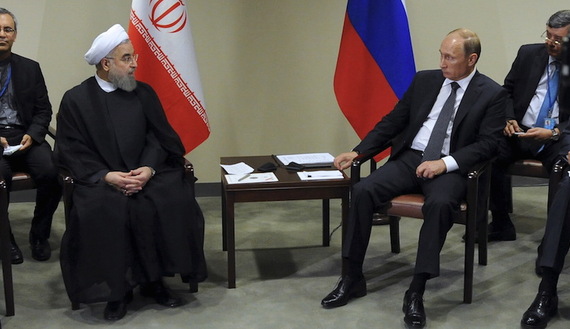
Common and immediate objectives have united Iran and Russia on Syria in the short run, and this unity will probably be flexed against the West’s influence in the long term. However, when it comes to some key aspects of Syria’s future — including the nature of the government and the rebuilding of the Syrian military — differences between Tehran and Moscow are bound to come to the surface.
Despite the shared short-term goals that have currently united them on Syria, Iran and Russia’s differences over Syria’s future are bound to lead them into conflict.
In broad terms, Iran and Russia have embarked on the same path and entered a new phase of the geopolitical game in Syria. A major power, Russia is trying to redefine its role in the world, as evidenced by its actions in Ukraine and Syria. After 40 years, Moscow has returned to the Middle East to prove that today’s world is different — and multipolar. Iran’s strategy also revolves around redefining its geopolitical role. Iran’s game in Syria, Iraq, Lebanon and even Yemen shouldn’t be considered only from an ideological point of view, but rather as the Islamic Republic seeking what can be defined as living space.
In the short term, both Iran and Russia will attempt to preserve Syrian President Bashar al-Assad’s position, help him maintain the territory his government now controls and retake territories that the Syrian army has recently lost. There is also the consideration of Russia seeking to test its new weapons and air force. In summary, the obvious aim is to weaken the position of Assad’s opponents in Syria as much as possible, and this short-term objective will ensure the current Iranian-Russian unity.
Yet despite this unity, Moscow and Tehran have serious differences over the future of Syria.
Moscow and Damascus have traditionally been allies. In the past decades, Russia has been the largest exporter of weaponry to Syria, with Tartus serving as the main logistical hub for Russian arms shipments. Moreover, many Syrian commanders and senior officers have been trained in Russia. In this vein, the structure and equipment of the Syrian military depend on Moscow. Russia is thus pursuing the revival of the Syrian military as its leverage in the country, with the belief that the only way to influence the future of Syria is through restoring the Syrian military to its condition before the eruption of the civil war in 2011 — in other words, a secular army that can easily be controlled.
Iran, on the other hand, has chosen a completely different path. When Iran saw that the Syrian army was near collapse, it sought to strengthen irregular forces made up of volunteers. The Islamic Republic thus established a massive force composed of Alawites. The latter has now become the main force combating the different armed opposition groups and is more powerful than the Syrian army on the battlefield. These volunteer forces, which number about 200,000 men, take orders from Iran rather than the Syrian government. According to some reports, about 20,000 Shiites from Iraq, Lebanon and Afghanistan have also joined them. These forces may very well come to play an important role in the future of Syria. Moreover, the Islamic Republic hopes to use them as a viable alternative to the Assad government. This strategy is not unique to Syria but also encompasses Iranian policy toward Iraq, Lebanon and even Yemen. In Lebanon, Hezbollah is at least as powerful as the Lebanese army. In Iraq, Iran-backed Shiite militias are now the main pillars of the country’s armed forces. Moreover, the Yemen army has been incorporated into the popular Ansar Allah forces.
Iran and Russia also differ on the future political orientation of the Syrian state. For Iran, it is vital that the future Syrian political system maintains an anti-Israeli stance and continues to act as a bridge between Tehran and Hezbollah. In contrast, Russia is not concerning itself with these matters and is even outright avoiding them. Indeed, Israel and Russia have held several meetings in the past few months at the political and military levels to find common ground on Syria. The two sides have agreed on avoiding probable military confrontation in the skies over Syria, and Moscow has even committed itself to preventing Hezbollah from obtaining Russian arms. It has also pledged to impede actions against Israel by pro-government militias and Hezbollah forces in the Golan Heights. Of note, Israel — unlike its Western allies — has not adopted or expressed a negative stance toward the Russian military presence in Syria, signaling that Moscow does not want Syria’s future political system to maintain an anti-Israeli posture. In this vein, it should be borne in mind that Israel and Russia have also recently been building good relations and even signed contracts related to trade in advanced weaponry in addition to bilateral military exchanges. Indeed, the bigger picture shows that one of the main goals of Russia in Syria is to get more concessions from Europe and the United States on the issue of Ukraine.
Thus, the possibility of a compromise between Moscow and Washington is not far-fetched and may very well even be reached at the expense of Iran’s interests. In this vein, it seems that Russia and the United States do have the potential to come together over the future of Syria. The common threat posed by radical Islamists along with the lack of a viable alternative presented by Syrian liberals is inducing Russian-American consideration of someone from the Syrian Baath Party as a successor to Assad. At a joint press conference with his Russian counterpart after the first meeting on Syria in Vienna, US Secretary of State John Kerry announced that the two countries share a committment to the idea of a secular and democratic Syria. Russia’s discontentment with Iran’s influence in Syria can be detected in the words of President Vladimir Putin during a meeting with Assad, when he — without mentioning Iran’s role over the past few years in helping the Syrian government — said, “The Syrian people have resisted and fought international terrorism practically alone for several years now.”
In short, the differences between Iran and Russia over the future of Syria appear to be quite serious. Yet, these differences are not out in the open as the two countries are trying to achieve common and short-term goals for now. Moreover, it should not be overlooked that Russia is concerned that Iran and the West will narrow the gap between them in the aftermath of the nuclear deal, and that Moscow is therefore trying to show that it enjoys close ties with Tehran. Therefore, it is obvious that with the start of negotiations on the transition of power in Syria and disarmament of different armed groups in the post-Islamic State era, differences between Iran and Russia will inevitably come to the fore.

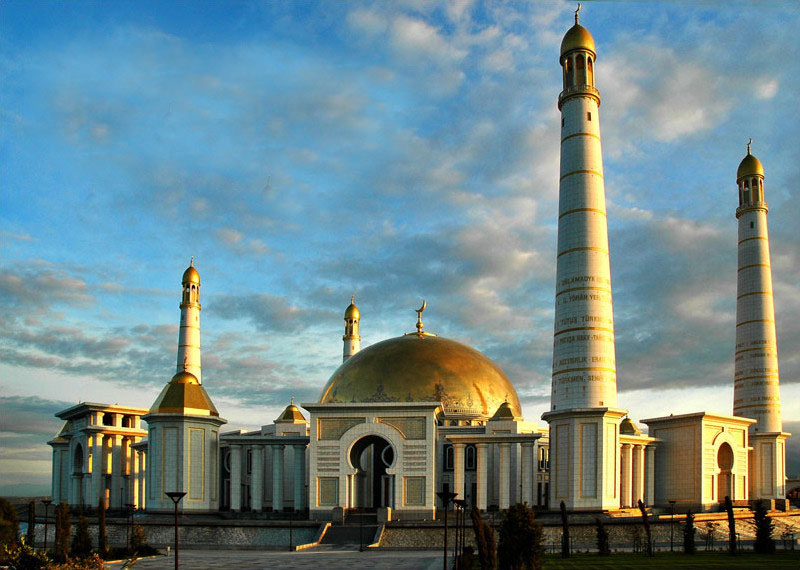
Kipchak Mosque at dusk, Ashghabat
4 – 18 October 2016
Places available
Turkmenistan and Uzbekistan Tour (TUZ) Dossier 2016 Click to download itinerary (pdf format)
From the blue-tiled splendour of Tamerlane’s Samarkand to the holy city of Buhkara, boasting a mosque for each day of the year, and beyond, the romantic desert-girdled khanate of Khiva, Uzbekistan lays claim to a breathtaking architectural legacy. Such splendours have attracted and astonished visitors since ancient times and this detailed journey is planned to allow time to relax and fully appreciate these awe inspiring fabled cities of the Silk Road. Our Central Asian journey begins in the Land of the Turkmen, where we explore the monuments of Ashgabat, including the Parthian fortress of Nissa. The great ancient cities of Merv and Kunya Urgench also feature plus a visit to the colourful Sunday market in Turkmenistan’s capital.

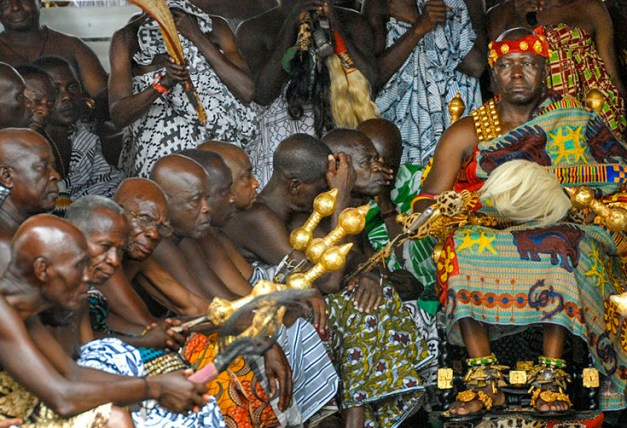
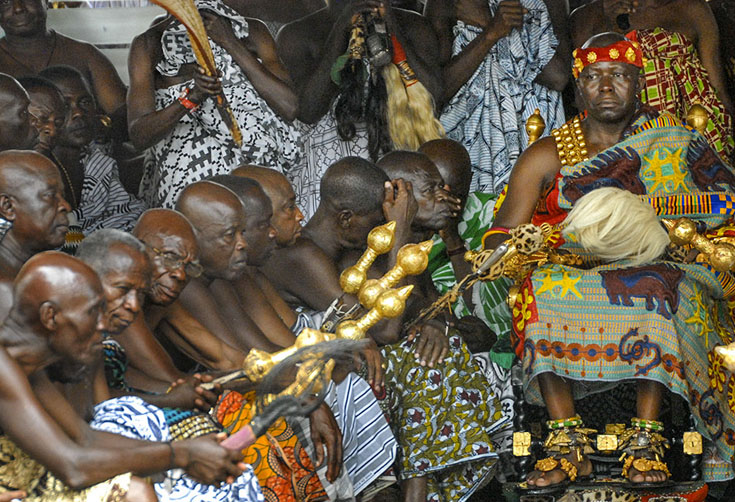
Procession of an Ashanti King at the Awukudae Festival © Patrick Syder Images
From its lush rainforests to its golden sandy beaches, Ghana is a land of immense natural beauty. On this journey through one of Africa’s friendliest nations we experience its diverse and rich culture, visiting vibrant markets, traditional tribal villages and the striking mud-stick mosques. We also visit the impressive Gold Coast Portugese forts. The tour is timed to coincide with two of Ghana’s most significant festivals; the Millet Festival; which happens every year during the harvest period and the Awukudae festival; that offers a unique opportunity to attend a highly colorful royal ceremony in one of the last African kingdom to have kept unchanged all of its rituals.
ITINERARY
Day 1 Fly from London to Accra
Early morning flight with Turkish Airlines from London Gatwick via Istanbul, arriving into Accra in the early evening. Transfer to the Novotel hotel.
Day 2 In Accra. Drive to Akossombo
Accra has maintained its unique identity despite the fast paced development currently underway in this intriguing African city. We visit the National Museum and explore the old quarter of James Town, an area of colonial architecture topped by a 30m lighthouse and inhabited by the autochthonous population known as the Ga. Later we drive inland to the town of Akossombo our base for the next two nights at the Afrikiko Resort with dinner (B,D)
Day 3 Attend Millet festival
We drive into the Krobo region today to witness the colorful Millet festival, celebrated over seven days with religious and social events that enables renewal of love, unity, solidarity and gratitude to God for his blessings manifested in good harvest, riches, good health and protection. The festival unites the people as one cultural entity and the youth are provided with the opportunity to learn the culture of their people and to make friends and choose spouses. Traditional chiefs turn up in their most beautiful dress and are surrounded by an enthusiastic crowd. Along with their entire court, the chiefs parade following the rhythm of the drums (B,L,D)
Day 4 Boat ride on the Volta. Witness Voodoo ceremony
This morning we have boat journey along the Volta and visit some small fishing villages. Later we head south to Sogakope and reach a remote hidden village where we will join a Voodoo ceremony to get an insight of how such traditions are still deeply rooted in the African soul. The frenetic rhythm of the drums and chants of the chief help to call the voodoo spirit which takes possession of some of the dancers who fall into a deep trance. Overnight at Cisneros Villa Hotel or similar with dinner (B,L,D)
Day 5 Drive along Gold coast to Elmina
Today we move west to the coastline of the former Golden Coast Colony. We drive along the scenic coastline, where the main attractions are the many European forts and castles built during the era of the slave and gold trade. Between these ancient forts are beaches lined with coconut palms and the unspoiled fishing villages of the Fante people. Two nights at the Coconut Grove Beach Resort (B,D)
Day 6 Visit Elmina Fort and Kakum National Park
Elmina Fort is the oldest European building in Africa, built by the Portuguese in the 15th century. At different times the fort has been used as a warehouse to trade gold, ivory, and eventually slaves. We visit the fort and the nearby fishing village with its lively atmosphere and colourful boats before we discover the Kakum NP, observing incredible views of the forest from above by way of a canopy rope bridge (B,L,D)
Day 7 Drive to Kumasi. Visit Ashanti Kingdom
Kumasi is the historical and spiritual capital of the old Ashanti Kingdom. The Ashanti people were one of the most powerful nations in Africa until the end of the 19th century, when the British annexed the Ashanti country to their Gold Coast colony. We visit the Cultural centre, which has a rich collection of Ashanti artifacts housed in a stunning Ashanti house, one of Africa’s largest markets and to hopefully witness a traditional Ashanti funeral attended by mourners wearing beautifully red or black togas. Overnight at Noble House hotel with dinner (B,L,D)
Day 8 In Kumasi. Attend Awukudae festival
We visit the Royal Palace Museum displaying its unique collection of Ashanti souvenirs before attending the Royal Festival known as the Awukudae. The Ashanti King is carried on a palanquin through the procession of Ashanti people who have come to pay homage to him followed by a celebration which parades colourful canopies and umbrellas amongst drummers, dancers, horn blowers and singers who perform in honour of their ancestral spirits. At the end of the ceremony we continue north to Techiman. Overnight at Okubi Hotel with dinner (B,L,D)
Day 9 Visit Sacred Monkeys and Dagomba Tribe
We walk in the Brong Afo forest home to Monas and Colobus monkeys which are seen as sacred by the population who live nearby. We continue north into the savannah where we visit the Dagomba tribe. They build round clay huts with thatched roof. The village chief’s house is characterised by being a large hut with a central pole supporting the roof where the council’s elder meet. Overnight at Gariba Lodge with dinner (B,L,D)
Day 10 Exploring the Bolgatanga region
A short walking excursion on the high-plateau of the Tongo Hills with magical views where we see a bizarre set of neatly stacked rock pinnacles seen locally as old houses of the Gods. We view a deep fissure on the side of a highest mountain said to host an oracle. In the Navrongo region, we meet the Kassena people who live in fortified houses decorated in colourful frescoes by the women. Overnight at Christal Ex Tee Hotel with dinner (B,L,D)
Day 11 Visit Lobi Peoples
We spend much of the day visiting Lobi villages. The Lobi comprise a number of ethnic groups in both Ghana and Burkina Faso whose name translates as Children of the Forest. They still adhere to many of their traditional customs and animist practices, worshipping distinctive wooden fetishes and continuing to uphold their age-old beliefs in the spirit world. Residing in fortified mudbrick compounds in family groups, much like their Dagarti neighbours, the men still carry bows as their ancestors have for generations: the Lobi still have a fearsome reputation as hunters and warriors. Overnight at Upland Hotel with dinner (B,L,D)
Day 12 Visit Dagarti Peoples. Drive Kumaisi
A long but interesting drive back to Kumaisi today. We stop to visit the Dagarti peoples who like the Lobi, have always kept strong ties to the invisible world of spirits, represented by fetishes, shrines and sacred sites. They build fortified houses to protect their family as well as all their belongings. We follow the ancient caravan road through which goods, people and their goods traveled for centuries. Gold dust and cola nuts were brought from the forest and exchanged for salt, cloth and spices coming from the North. We see mosques of a Sudanese architectural style imported from Mali’s river Niger delta region. We arrive in Kumasi in the late afternoon and overnight at the Noble House Hotel with dinner (B,L,D)
Day 13/14 Drive to Accra. Fly to London via Istanbul
We drive back to the capital with a final opportunity to visit of the cultural centre and artisan market and time for some final souvenir hunting. We check into the Novotel hotel where some day-use rooms will be available until 18h00 when we transfer to the airport for our Turkish Airline flight via Istanbul arriving into London Heathrow the following morning (B)