Syder Travel

Patrick Syder FRGS ~ Tour Leader/Trip Organiser/Travel Photographer

  • Planned Trips for 2026/2027
  • Destinations
  • Contact Patrick
  • About Patrick
  • Join Patrick
  • Past Testimonials

UZBEKISTAN – Fabled Cities of the Silk Road

Posted by patricksyder on January 3, 2014
Posted in: Asia, Uzbekistan. Leave a comment

View of Mir-i-Arab Madressa, Bukhara

View of Mir-i-Arab Madressa, Bukhara

From the blue-tiled splendour of Tamerlane’s Samarkand to the holy city of Buhkara, boasting a mosque for each day of the year, and beyond, the romantic desert-girdled khanate of Khiva, Uzbekistan lays claim to a breathtaking architectural legacy. Such splendours have attracted and astonished visitors since ancient times and this detailed journey is planned to allow time to relax and fully appreciate these awe inspiring fabled cities of the Silk Road. Time is spent in the beautiful Ferghana Valley, in the heart of Uzbekistan, home to distinctive local architecture and traditional crafts from silk-weaving to pottery.

ITINERARY

Day 1   Fly to Tashkent

Evening departure from Heathrow Terminal 4 with Uzbekistan Airways for our direct flight to Tashkent.

Day 2   In Tashkent

Morning arrival in Tashkent and transfer to the Dedeman Silk Road hotel for two nights. We spend the afternoon in Uzbekistan’s capital, the largest city in Central Asia, at the impressive History museum and the grand Independence Square. Welcome dinner in a smart city restaurant (B,D)

Day 3   In Tashkent

We start the morning with a visit to the bustling Chorsu Bazaar, the largest in Tashkent before continuing to the Museum of Applied Arts housed in a delightful building in traditional Uzbek style. The afternoon is spent in the old city of Tashkent to view its impressive complex of ancient madressahs. Dinner in the hotel (B,D)

Day 4   Fly to Urgench. In Khiva

Transfer to the airport for our flight to Urgench. Drive to Khiva for two nights at the comfortable Malika Khiva hotel, located close to the main gate of this most complete of the Silk Road cities. Afternoon tour of Khiva with its stunning array of medieval mosques, madressahs and palaces. Dinner in hotel (B,D)

Day 5   In Khiva

Morning tour of the ancient monuments of Khiva including the stunning Jummi or Friday mosque and the elaborate Khiva Ark. After lunch you will have time to explore this fabled city at one’s own pace. Dinner in a local restaurant (B,D)

Day 6   Drive to Bukhara

A full day of driving today through the Kizilikum desert, crossing the ancient Oxus River before arriving at Bukhara. Three nights stay at the Amelia Boutique hotel, perfectly located in the heart of the historic old city, part of the architectural complex known as Lyabi-Khauz . Dinner at a local restaurant (B,D)

Day 7   In Bukhara

This morning’s tour visits one of the great Asian cities of antiquity. Starting at the vast Arg Citadel, fortress of the Bukharan Khans before a short drive to the stunning Summer Palace of the Last Emir. The afternoon is spent at leisure to visit the bazaars and soak up the atmosphere of this fabled city. Dinner in an ancient madrassa accompanied by a folkloric show (B,D)

Day 8   In Bukhara

A second morning of sightseeing to the heart of the city’s historic centre to marvel at the huge Kalyan minaret, and nearby mosque, the unique Chor Minor and an array of jade domed and elaborately tiled madrassas. A further free afternoon at leisure to wonder at Bukhara’s stunning ancient architectural past. Dinner in ancient madressa accompanied by classical recitals (B,D)

Day 9   Drive to Samarkand

We visit Gijduvan Museum of Ceramics and nearby ceramics school, which has deep roots. The skills have been passed from father to son from generation to generation. Today Gijduvan is home for the sixth generation of potters of Narzullayevs family who made Gijduvan school ceramics famous all over the world. Visit to Hazora village to see the oldest mosque in Central Asia dating back to Omayyad period. We also pause at the ancient caravanserai, Rabat Malik, on the Golden Road to Samarkand. Three night stay at the Malika hotel situated very close to the famous Registan Square. Dinner in the hotel (B,D)

Day 10  In Samarkand

This morning’s sightseeing starts at Tamerlane’s tomb, a jewel of Islamic art, before arriving at the magnificent Registan Square, the noblest square in Central Asia. We finish the morning tour at the beautifully decorated Bibi Khanym or Friday Mosque and old local bazaar. This afternoon we visit Ulug Beg’s Observatory and the Afrosiyab Museum. Dinner at a local restaurant (B,D)

Day 11  In Samarkand

Spending the morning in Samarkand, we visit the beautiful 14th century mausoleum complex of Shah-I-Zinda and Samarkand Paper Mill “Konigil Meros” where you can observe the traditional way of production of  silk paper in traditional paper mill with a water-wheel on the banks of the river Siab.

Afternoon free at leisure. Dinner at a local restaurant (B,D)

Day 12  Day trip to Shahr-I-Sabz. Rail journey to Tashkent

Morning drive across Zerafshan mountains to Shahr-I-Sabz, Tamerlane’s birthplace and his second capital where we visit the remains of his colossal Summer Palace, the blue domed 15th century Kokgumbaz Mosque and Mausoleum of Janangir with remains of royal necropolis. Return to Samarkand. Boarding the Afrasiab fast train to Tashkent arriving in late afternoon. Overnight at the Dedeman Silk Road hotel. Dinner in smart local restaurant (B,D)

Day 13  Fly London

We have a leisurely breakfast and morning at leisure before our lunchtime transfer to the airport for our afternoon flight with Uzbekistan Airways arriving into Heathrow Terminal 4 in the evening (B)

Price includes –

Tour accompanied by Patrick Syder FRGS

Specialist Uzbek guide throughout the tour

One Uzbekistan Airline domestic flight

All transportation – private a/c minibus and train

Full sightseeing programme including entrance fees

Quality local 3+/4 star hotels on a half board basis with many dinners in traditional restaurants

All airport transfers

Porter, hotel and restaurant staff gratuities


  • Click to print (Opens in new window) Print
  • Click to email a link to a friend (Opens in new window) Email
  • Click to share on X (Opens in new window) X
  • Click to share on Facebook (Opens in new window) Facebook
Like Loading...

CENTRAL ANATOLIA – A Journey through Antiquity

Posted by patricksyder on January 3, 2014
Posted in: Middle East. Leave a comment

Römisches Theater in Aspendos, Antalya, Südküste, Türkei
Aspendos Roman Theatre, Antalya

9 – 19 May 2015

Places Available

Turkey Tour (TCA) Dossier 2015 Click to download itinerary (pdf format)

An inspirational journey through Central Anatolia from Ankara, Turkey’s modern capital, to Antalya, perfectly located on the southern coast, and still retaining much of its antique character. Along the way we discover the vast range of varying religious faiths that have influenced the region’s historical and cultural legacies. From the power of the Hittite civilisation and the might of the Roman Empire to the exquisite art of the Byzantines and the mystical philosophy of the Sufi Dervish, this tour promises the traveller a rich and varied experience of an unspoilt and little visited region

  • Click to print (Opens in new window) Print
  • Click to email a link to a friend (Opens in new window) Email
  • Click to share on X (Opens in new window) X
  • Click to share on Facebook (Opens in new window) Facebook

In memory of Nelson Mandela

Posted by patricksyder on December 13, 2013
Posted in: Africa, Syder Travel Blog. Tagged: Nelson Mandela. 1 Comment

I had the extraordinary privilege (and luck!) to attend and photograph one of the world’s most positive and greatest recent historical events; when Nelson Mandela was released from Victor Verster prison in Paarl on Monday 12 February 1990 followed by his raptuous welcome to City Hall in Cape Town and his first ever public speech to the tens of thousands of mainly black South Africans that thronged the city…an incredible day!

I was physically shaking as I photographed the day (fortunately a clear bright one, so no camera shake!) .

Here is the framed front page from the Argus newspaper breaking the news of this great day, which has been proudly displayed on my office wall ever since. I will post a handful of the photos I took very soon.

IMG_1043

God bless you Nelson Mandela, may your legacy bring eventual peace to the entire continent of Africa – AMANDLA!

  • Click to print (Opens in new window) Print
  • Click to email a link to a friend (Opens in new window) Email
  • Click to share on X (Opens in new window) X
  • Click to share on Facebook (Opens in new window) Facebook

Letter from Erbil, Iraqi Kurdistan by John Simpson

Posted by patricksyder on September 19, 2013
Posted in: Syder Travel Blog. Leave a comment

Letter from Erbil by John Simpson

BBC World Affairs editor, John Simpson, reviews his recent visit to Erbil, capital of the self-autonomous Iraqi Kurdistan, 2014’s safe and emerging travel destination

  • Click to print (Opens in new window) Print
  • Click to email a link to a friend (Opens in new window) Email
  • Click to share on X (Opens in new window) X
  • Click to share on Facebook (Opens in new window) Facebook

ALBANIA – Land of Eagles

Posted by patricksyder on September 10, 2013
Posted in: Albania with Macedonia, Europe. Leave a comment


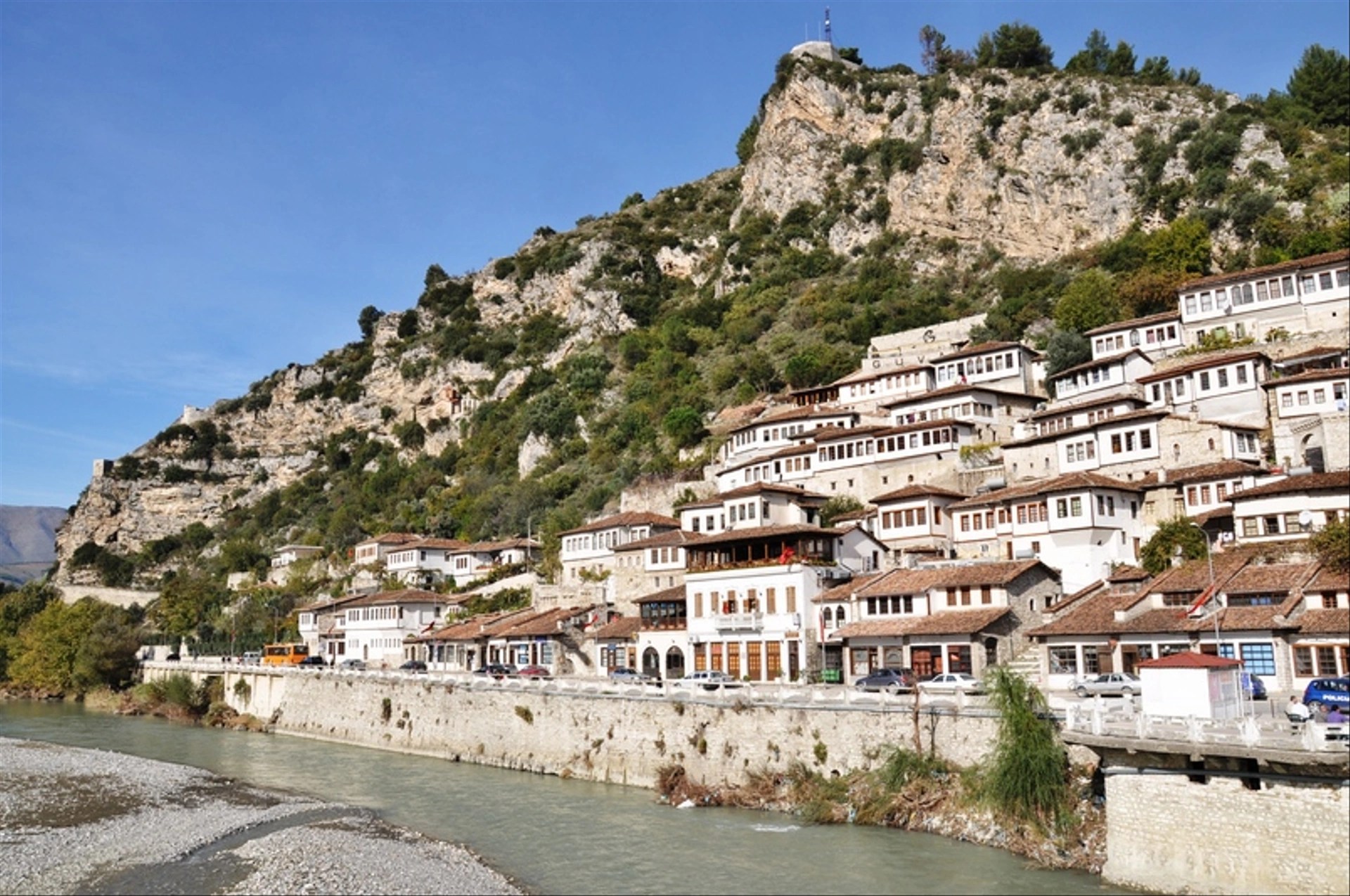
UNESCO town of Berat

Although Albania has only very recently emerged as a European destination for the inquisitive traveller, its friendly people and rich variety of archaeological and historical sites, combined with stunning, wild mountainous scenery is reason enough to warrant a comprehensive visit. With a number of listed UNESCO World Heritage sites and fascinating medieval castles and towns, this detailed 9 day tour is designed to allow for adequate time to fully appreciate the beauty of this lesser visited yet alluring country, known in antiquity as Illyria, the Land of Eagles.

Day 1 : Mother Teresa Airport – Tirana

Pick up at Tirana airport and transfer to Hotel. In the afternoon we will visit the National Historic Museum in Tirana offering an in depth introduction to Albanian history from prehistoric times to the present day. Welcome dinner at a traditional Albanian restaurant. Two nights in Tirana.

Day 2: Tirana – Kruja – Shkodra – Tirana (3.5 hours driving time)
After breakfast, we travel to Kruja, a small town perched high on the face of a hill, center of the Albanian resistance against the ottoman Turks under the leadership of our national hero Scanderbeg. Visit the fortress of Kruja, the Scanderbeg Museum, Ethnographic Museum, and the old bazaar full of souvenirs including handmade ones. Afterwards proceed to the northern city of Shkodra with the most important town of north Albania and the Illyrian capital, in the 3rd century BC. We visit the Rozafa castle with spectacular views all around. We pause to visit the Mesi Bridge; an old bridge built in the mid 18th century with beautiful mountain scenery as a backdrop.

Day 3 : Tirana – Ardenica – Apollonia – Vlora (3.5 hours driving time)
After breakfast we travel to Vlora where Albanian Independence was proclaimed. On the way we stop at the Monastery of Ardenica, thought to have been built in the Middle Ages, as claimed by an entrance stone dating back to 1417. It is also supposed that Scanderbeg the Albanian Legendary hero of Middle Ages, was married here at the small chapel of the complex. Icon paintings dating between 1743-1745, by Albanian artists such as Konstandin & Athanos Zografi, as well as Konstandin Shpataraku, adorn the main chapel. After the visits, we will continue our journey to the ancient city of Apollonia situated on the famous Via Egnatia. Apollonia was one of the most important cities in Roman times renowned for its school of oratory. Julius Caesar sent his nephew Augustus Octavian to study here, a clear testimony of the advanced level of learning Apollonia provided at the time. We will visit the vast archaeological remains and the adjacent archaeological museum situated in a adjacent Orthodox monastery from the Middle Ages. Afterwards we reach Vlora, home to the first Independent Albanian Government. Afternoon at leisure to explore the beautifully restored waterfront promenade; Lungo Mare. Two nights in Vlora.

Day 4: Vlora
Founded in the 6th century B.C.E. and known in Antiquity as Aulona, Vlora was built in one of the most beautiful spots in southern Albania. Its shores present a unique mixture of rocky and sand beaches, and the gorgeous vistas of the Karaburun Peninsula and Sazan Islands stretch in front of the city.
The city is of historical importance for Albania, having hosted its First National Assembly, where Albania declared independence from the Ottoman Empire on November 28, 1912. . Another highlight is Muradije Mosque, constructed by famous architect Sinan the Great in 1542. It is the only remaining work by the architect in Albania. The natural terrace of Kuzum Baba, located on top of a hill that overlooks the city, was named after a Bektashi spiritual leader.

Day 5: Vlora – Butrint (UNESCO) – Saranda – Gjirokastra (5 hours driving time)
After an early breakfast we depart to Saranda. While we drive through the spectacular Albanian Riviera, we also observe the the mazing turquoise blue colour of the Ionian Sea. At around 1000 m above the sea level the top of the Llogora pass, offers breath-taking sceneries. We make short stop at Ali Pasha Fort, located at the Porto Palermo bay, a strategic point from where was easily possible to control sea trade routes. Then we continue past Saranda to Butrint National Park. The ancient remains of Butrint are a UNESCO world heritage site and the most important archaeological finds in Albania. Legend associates this city with Trojan settlers who fled Troy under the leadership of Aeneas. In fact the city was first settled by Hellenic colonists and was continuously inhabited for centuries forming archaeological layers of several eras of civilization. Apart the beautiful antique ruins it has the added benefit of being situated in a beautiful peninsula, rich in flora and fauna. After the visits we proceed to Gjirokastra for two nights.

Day 6: Gjirokastra (UNESCO)
The highlight of this day is Gjirokastra – another UNESCO site with a beautiful and very distinct architecture. Gjirokastra is one of the most important towns of southern Albania, has been declared a “Museum Town”. It is built on the slope of a mountain and is known for its characteristic and narrow stone paved streets. The dwelling houses have the form of medieval towers consisting in a building ensemble with characteristic architecture. Visit the Castle, which stands like a balcony over the town enabling the visitors to enjoy a beautiful view, the Ethnographic Museum which is also the house where the Albanian dictator was born in, and the born house of the famous Albanian writer Ismail Kadare who has won many international book prices.

Day 7: Gjirokastra – Berat (UNESCO) (3.5 hours driving time)
Morning drive to Berat, a UNESCO town known for its remarkable architecture, with houses seemingly built upon one another’s backs. Inside the ancient Berat Castle, still inhabited by locals, we’ll find a rich history and a glimpse into Albanian heritage. The castle once boasted over 40 churches, and seven remain, including the Onufri Museum, displaying masterpieces by the 16th-century Albanian Icon painter, Onufri. Afternoon tour of the castle and the old quarter. Overnight in Berat.

Day 8: Berat – Durres – Tirana (2.5 hours driving time)
After breakfast, we depart for Durres, one of the oldest cities in the country, founded in 627 B.C., where we’ll enjoy lunch by the sea (optional). After lunch, we embark on a sightseeing tour of the Amphitheatre, one of the largest in the Mediterranean, located right in the heart of the modern city, and the Archaeological Museum, which showcases a wealth of artifacts from the city and its surroundings. After our visit in Durres, we return to Tirana for the overnight stay.

Day 9: Tirana – Heathrow (UK)
After a leisurely breakfast we transfer to Mother Theresa International airport for our return flight with British Airways arriving mid afternoon at Heathrow.

Cost £1995.00 per person sharing a Twin room
£200.00 Single Supplement

Included:

• Escorted by Patrick Syder FRGS
• Transfers from and to Airport
• Transportation with a A/C vehicle
• Accommodation in 4* hotels with breakfast
• Experienced English-speaking tour guide through the whole tour
• Entrance fees to the sites mentioned
• All dinners in traditional restaurants

.

  • Click to print (Opens in new window) Print
  • Click to email a link to a friend (Opens in new window) Email
  • Click to share on X (Opens in new window) X
  • Click to share on Facebook (Opens in new window) Facebook

Albania dusts off ancient treasures

Posted by patricksyder on September 10, 2013
Posted in: Syder Travel Blog. Leave a comment

Albania dusts off ancient treasures

A BBC article about the UNESCO Heritage site of Butrint and the challenges the Albanians face in its preservation

  • Click to print (Opens in new window) Print
  • Click to email a link to a friend (Opens in new window) Email
  • Click to share on X (Opens in new window) X
  • Click to share on Facebook (Opens in new window) Facebook

IRAQI KURDISTAN – Land of the Kurds

Posted by patricksyder on August 30, 2013
Posted in: Middle East. 1 Comment

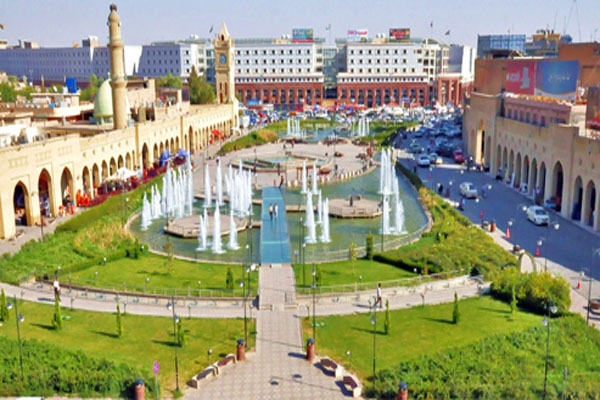
Erbil, Kurdistan
The main square, Erbil

Kurdistan is not only safe and peaceful, it’s scenically splendid, historically fascinating and its people are hugely welcoming. This comprehensive eight day escorted tour includes the three major cities of Dohuk, Erbil and Sulymaniyah. We explore the colossal citadel in Erbil, marvel at the beauty of the Gali Ali Beg canyon, dine at a traditional Kurdish picnic and acknowledge the terrible legacy of Saddam Hussein. Throughout our journey across the region lined with fertile valleys, stunning waterfalls, green pastures and snow-capped mountains, we experience the warmth, generosity and pride of the Kurdish people who despite the challenges of their recent past, are now looking forward to a prosperous and bright future. Now is the time to visit before the crowds discover this hidden world

  • Click to print (Opens in new window) Print
  • Click to email a link to a friend (Opens in new window) Email
  • Click to share on X (Opens in new window) X
  • Click to share on Facebook (Opens in new window) Facebook

Images of Morocco (My Flickr)

Posted by patricksyder on August 17, 2013
Posted in: Morocco. Leave a comment
KZ's Morocco Tour (Day 8)KZ's Morocco Tour (Day 8)KZ's Morocco Tour (Day 8)Morocco (Day 1)KZ's Morocco Tour (Day 2)KZ's Morocco Tour (Day 2)
KZ's Morocco Tour (Day 4)KZ's Morocco Tour (Day 6)KZ's Morocco Tour (Day 2)KZ's Morocco Tour (Day 1)KZ's Morocco Tour (Day 6)KZ's Morocco Tour (Day 9)
KZ's Morocco Tour (Day 10)KZ's Morocco Tour (Day 9)KZ's Morocco Tour (Day 9)KZ's Morocco Tour (Day 9)Morocco, May 2011Morocco, May 2011
KZ's Morocco Tour (Day 9)Morocco, May 2011Morocco, May 2011KZ's Morocco Tour (Day 9)KZ's Morocco Tour (Day 9)KZ's Morocco Tour (Day 9)

Patrick Syder Images’ photostream on Flickr.

Images of Morocco

  • Click to print (Opens in new window) Print
  • Click to email a link to a friend (Opens in new window) Email
  • Click to share on X (Opens in new window) X
  • Click to share on Facebook (Opens in new window) Facebook

Gobekli Tepe: a new wonder of the ancient world

Posted by patricksyder on June 21, 2013
Posted in: Syder Travel Blog. Leave a comment

One of the main highlights of my November tour to SE Turkey is the fascinating site of Gobekli Tepe. You can read here why now is the time to visit before the hordes arrive

https://sydertravel.wordpress.com/2013/06/21/gobekli-tepe-turkey-a-new-wonder-of-the-ancient-world-by-jeremy-seal/

  • Click to print (Opens in new window) Print
  • Click to email a link to a friend (Opens in new window) Email
  • Click to share on X (Opens in new window) X
  • Click to share on Facebook (Opens in new window) Facebook

Göbekli Tepe, Turkey: a new wonder of the ancient world by Jeremy Seal (Telegraph Travel Section 23/04/2013)

Posted by patricksyder on June 21, 2013
Posted in: Europe, Turkey. Leave a comment

Wow,” exclaims the visitor from New Zealand, a place, after all, with a human history shorter than most. For from a wooden walkway we’re gazing down at an archaeological site of giddying age. Built about 9000 BC, it’s more than twice as old as Stonehenge or the Pyramids, predating the discovery of metals, pottery or even the wheel. This is Göbekli Tepe in south-eastern Turkey, generally reckoned the most exciting and historically significant archaeological dig currently under way anywhere in the world, and there are neither queues nor tickets to get in.

Wow for a number of reasons, then, though it’s neither the access nor the staggering implications of the site’s age that has particularly impressed the man from distant Auckland. Neolithic Göbekli Tepe is also remarkably beautiful. From the partially excavated pit rise circular arrangements of huge T-shaped obelisks exquisitely carved with foxes, birds, boars and snakes or highly stylised human attributes including belts, loincloths and limbs. We’re profoundly moved by this glimpse into a radically recast prehistory, and mystified too. Even the archaeologists hard at work on this September morning can only speculate about its function, not least because the stones appear to have been deliberately buried.

“This series of sanctuaries is the oldest known monumental architecture,” explains the excavation leader and approachable on-site presence Professor Klaus Schmidt. “Maybe burial was already part of their concept from the very beginning.”

Two years ago a bare trickle of visitors found their way to this remote hilltop revelation. Now, however, visitors are building their entire itineraries around Göbekli Tepe, surest of shoo-ins for future World Heritage Status, and foundations are already in place for a protective site canopy, a nearby visitors’ centre and a ticket office. Numbers are set to explode here, the more so because the surrounding Euphrates region centred on the ancient cities of Gaziantep and Sanliurfa happens to boast an exceptional wealth of cultural draws.

It helps that another spectacular summit monument, the vast stone heads in honour of Roman-era King Antiochus on nearby Nemrut Dagi, has figured prominently on must-see lists for decades. In recent years, however, there have been further momentous discoveries such as the mosaics at Roman Zeugma, which were rescued from the rising waters of the dammed Euphrates before being installed in the magnificent new museum at Antep – the locals don’t bother with the “Gazi” prefix – in 2011.

With major restorations across Antep’s historic centre and its burgeoning reputation among foodies, not to mention another substantial mosaic find at Haleplibahce in the centre of Urfa (again, no prefix), it’s perhaps no surprise that the region’s proximity both to Turkey’s troubled border with Syria and to adjacent areas of Kurdish unrest are doing little to dampen down interest.

Antep, despite the fatalities caused by a recent car-bomb blamed on Kurdish separatists, is awash with Western visitors. I pass them in the high-walled alleys of the old city where the painted plaques above the doors announce the owners as honoured hacis, or pilgrims, to Mecca. All over a city knee-deep in development money overflowing from Euphrates dam projects, masons spectral with stone dust are restoring mosques and the gated artisans’ arcades known as hans. Not that the tarting up has leached anything of Antep’s famous atmosphere. In grimy ateliers, copper workers hammer patterns into decorative platters, and sparks fly from the spinning stones of the knife sharpeners. On Crazy Sheep Street, shawled women are buying red peppers by the sackload and hauling them off to the alleys outside their front doors where they and their neighbours squat to hull them for a spicy cooking paste called salça. The lanes are fronted with baskets of spices and nuts, especially locally grown pistachios, the symbol of the city and the star turn in its distinctive “meat and sweet” cuisine; nowhere has a higher density of baklava-style pastry shops, from huge salons to tiny deli counters, than Antep.

I dine at a cavernous institution called Imam Cagdas, a kebab and baklava diner with wipe-down menus, sweep staircase and waiters in traditional monochrome. The traditional starter, a mince-topped pizza-style flatbread called lahmacun, is followed by a superior kebab – mine is rich in garlic and pistachio – washed down with ladles of sour-yogurt ayran. I move on to a plate of baklava before being tempted into another pistachio pudding, fistik sarma. Overload. The good news is that my lodgings at Anadolu Evleri, a collection of town houses with shabby-chic rooms arranged around a high-walled courtyard, are just next door.

So next morning to the city’s new Zeugma Museum, a stunning ensemble of light and space that confirms the extent of Antep’s civic ambitions. This world-beating collection of second-century Roman mosaics, rich in geometric pattern and mythological detail, are displayed from a range of perspectives including raised walkways and mezzanines, and with other retrievals from Zeugma such as frescoes, fountains, columns and statues. It’s a collection all the more poignant for the fact that it acknowledges the considerable thefts suffered in the course of the Zeugma excavations, with projected images filling in for the illicitly lifted mosaic sections. A low-lit labyrinthine corridor leads to the standout mosaic, the so-called Gypsy Girl, whom experts have more accurately identified as a Dionysian maenad; a party girl, in short, if her eyes – which even after all this time spell nothing but trouble – are anything to go by.

We take the road east to visit what remains unsubmerged of Roman Zeugma – a fine villa, complete with frescoes and mosaics – though my eye is drawn to the shimmering lake that once was the Euphrates. The road continues through pistachio orchards to the half-drowned town of Halfeti, where the few townsfolk that remain now offer nostalgia-tinged boat trips over their submerged homes and orchards.

The new topography is beautiful though surreal, and full of bizarre adaptations like the raised duckboards that have been fitted so that the mosque may continue to function. “Worship here is permitted,” a sign on the door confirms, “but swimming in the mosque is forbidden.”

At sand-coloured Urfa we are on the edge of Arabia. To their owners’ whistles flocks of homing pigeons rise from flat-topped roofs hung with lines of drying aubergines in the early evening. Beneath the crusader castle families walk by the sacred ponds and the shaded tea gardens that mark the cave where Abraham is said to have been born.

In the grand yards of the mosques clustered in the honour of a prophet sacred to all three monotheistic religions, men in shirt sleeves and in Arab turbans gather to wash at the fountains; flocks of women from lands to the south pass in all-over black but for the gold jangling at their wrists. Beyond the gardens I wander into Urfa’s labyrinthine bazaar, an exotica of turnip juice stands, stalls serving fried liver, pigeon traders and cot makers.

In the morning Mehmet, a local archaeologist, leads me beyond the sacred ponds to the Aleppo Gardens (Haleplibahce) where the city’s own mosaics are on display in situ. The centrepiece of these recent finds is the so-called Amazon Villa. The best of these fifth-century mosaics – a pictorial life of Achilles, and a magnificent rendering of an African native and zebra – are exquisitely suggestive of another time in the rich and varied history of this frontier city. Then Mehmet points beyond the villa where a site is being cleared for a major new archaeological museum, one that no doubt means to match anything rival Antep can do.

The rush is on; in just two years’ time, little-known cultural attractions like the mosaics at Haleplibahce and the obelisks at nearby Göbekli Tepe are slated to be firmly established on the tour bus itineraries. By then, however, who can say what other treasures will have turned up in this history-rich corner on Turkey’s Kurdish and Arabian borders?

  • Click to print (Opens in new window) Print
  • Click to email a link to a friend (Opens in new window) Email
  • Click to share on X (Opens in new window) X
  • Click to share on Facebook (Opens in new window) Facebook

Posts navigation

← Older Entries
Newer Entries →
A WordPress.com Website.
Syder Travel
A WordPress.com Website.
  • Subscribe Subscribed
    • Syder Travel
    • Already have a WordPress.com account? Log in now.
    • Syder Travel
    • Subscribe Subscribed
    • Sign up
    • Log in
    • Report this content
    • View site in Reader
    • Manage subscriptions
    • Collapse this bar
 

Loading Comments...
 

    %d